

Located in Chile's Atacama Desert, the area boasts some of the world's darkest nights, making it an ideal location for ground-based astronomical observations.
Standing in the desert at 2 a.m., with no stray light in sight, the night sky is pristine and clear. The Milky Way stretches across the celestial canopy like a white ribbon, and the distant Large and Small Magellanic Clouds are clearly visible to the naked eye. Starlight from 200,000 light-years away is also clearly discernible…
Many groundbreaking astronomical discoveries have been made here: the first-ever image of an exoplanet; the trajectory of the supermassive black hole at the center of the Milky Way; and numerous discoveries that have changed humanity's understanding of the universe all originated in this darkness.
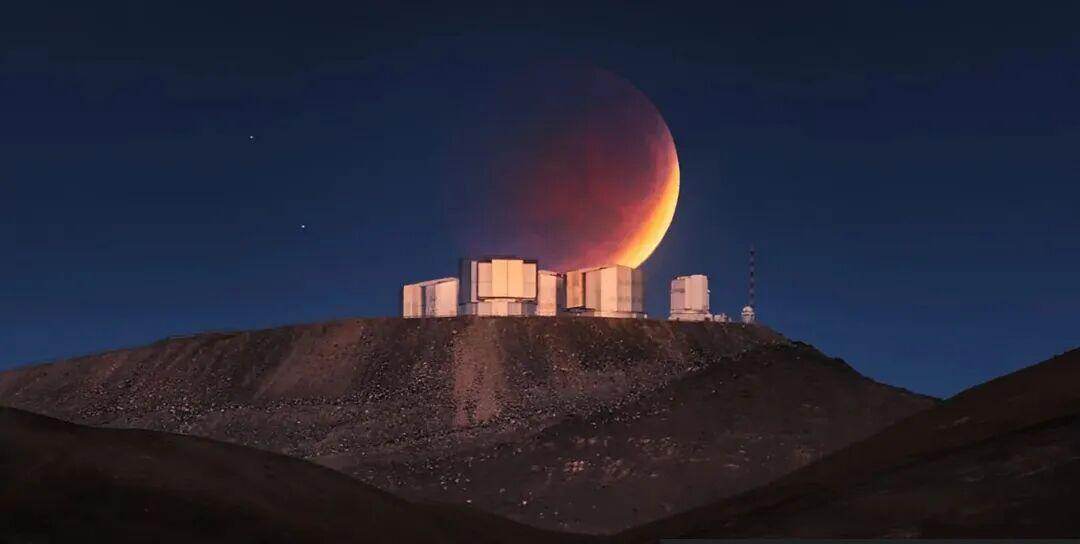
To preserve the darkness, the observatory maintains strict internal management: the entire building must be sealed off at night, vehicles cannot use their headlights, and signs everywhere remind people that "darkness is beauty"—every detail is designed to minimize light leakage. This location is 130 kilometers from the city of Antofagasta, within a two-hour drive of only desert and the sea.
I. Global Light Pollution Spreads Rampantly, Dark Nights Have Become a Scarce and Endangered Resource
The Atacama crisis is a microcosm of the current state of the world's night sky. Currently, 80% of the global population lives under the shadow of light pollution. From 2011 to 2022, the brightness of the night sky increased by an average of nearly 10% annually. Where 250 stars were once visible, only 100 will remain visible in a decade or so.
Of course, the harm of light pollution goes far beyond simply not being able to see stars:
A Heavy Blow to the Astronomical Field
In the 1970s, the scientific community drew a warning line: when the brightness of the night sky exceeds natural levels by 10%, the accuracy of observations will decrease significantly. Now, two-thirds of the world's large telescopes have crossed this line; only six observatories remain in the Atacama region, and only here is the brightness increase less than 1%, a very precious reserve.
The Collapse of the Ecosystem
Artificial light disrupts the natural rhythms of day and night for plants and animals, disorienting migratory birds and disrupting the flowering and fruiting cycles of plants, impacting the entire food chain.
Adverse Effects on Physical and Mental Health
The prolonged inability to see the entire night sky disconnects humans from nature, having a long-lasting impact on their mental and emotional well-being. Many researchers are advocating that strong light pollution should be classified as a mandatory environmental pollutant, alongside exhaust fumes and wastewater.
II. Multiple Threats Encircling the Desert, Industrial Lighting as the Primary Enemy
The greatest threat comes from mining and new energy industrial parks.
In the past 45 years, the brightness of industrial light around the Atacama Desert has suddenly increased dramatically. The Inna large industrial project, located just kilometers from the observatory, once particularly alarmed astronomers. Calculations showed that it could cause a sudden 50% surge in light pollution in the local night sky, and also introduce air turbulence and vibrations, both of which interfere with observations.
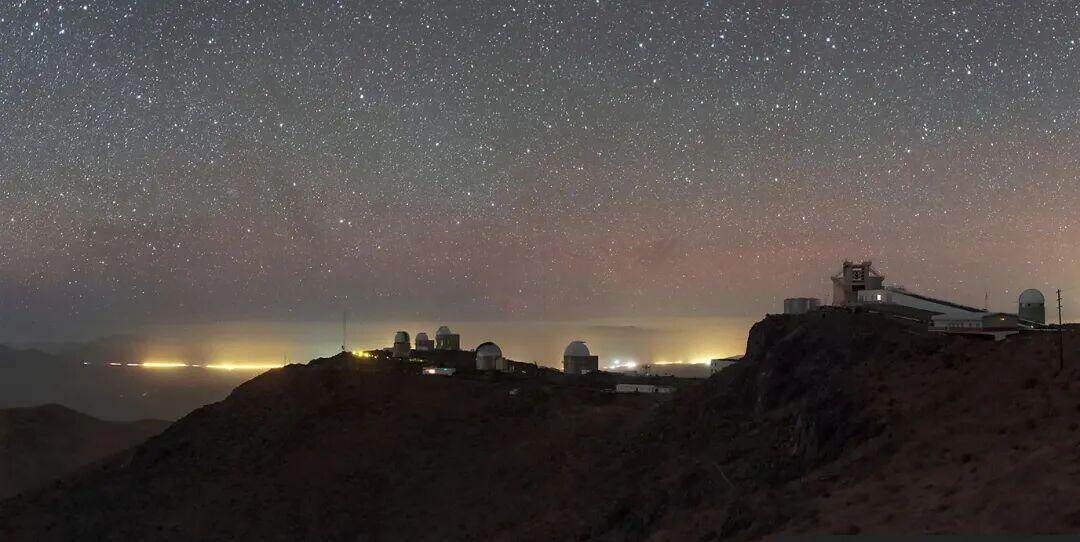
Fortunately, the operating company voluntarily stopped the project in early 2026, not due to environmental pressure, but because it shifted its business focus to energy storage and renewable energy. The regulatory framework remains unchanged, and similar projects could reappear at any time.
The current approval rules have significant loopholes: the evaluation standard still uses the outdated 10% threshold from the 1970s, yet even a 1% increase in brightness is very harmful in top-tier observable areas like the Paranal Observatory; approvals only calculate the brightness of individual construction sites, and the combined brightness of multiple projects can easily exceed the standard, but there is no coordinated control.
The International Astronomical Union updated the rules in 2025, requiring strict upper limits based on observatory classifications, but enforcement is far from sufficient. Local scholars are pushing for a second-level control standard, which would give the government the right to forcibly dim lights and replace lighting equipment if they exceed the limit.
Mega-satellite constellations like Starlink are clearly visible to the naked eye, appearing as a train of satellites streaking across the night sky.
The current quantity is barely manageable, but if a data center project with millions of orbiting satellites is implemented, the entire night sky will be filled with artificial reflectors, significantly obstructing images captured by ground-based telescopes.
Currently, in Antofagasta, where the city is gradually expanding, the area of lighting is extending towards the edge of the desert, and the faint light is slowly eroding the boundaries of observation…
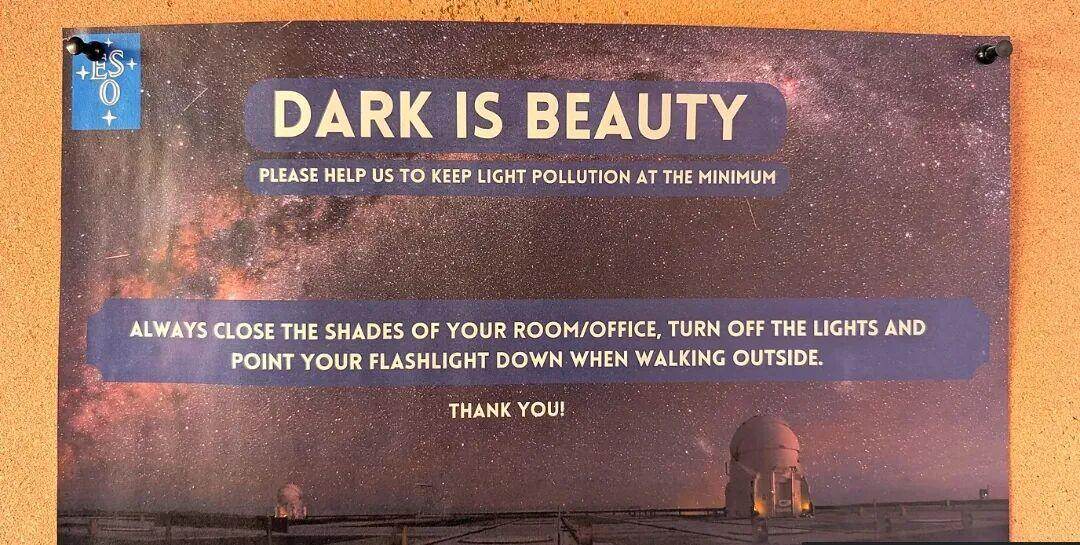
Paranal Observatory strictly controls light pollution and encourages visitors to protect the dark environment. (Image source: Richard Fisher)
III. Nighttime cannot be replicated; once lost, it's gone forever.
Some might think that space telescopes can compensate, but both are indispensable: the James Webb Space Telescope is indeed powerful, but giant reflectors like the ELT (39-meter telescope) are simply too large to be launched into space by rockets.
Large-aperture telescopes on the ground and space equipment are complementary partners. Without nighttime bases like Atacama, humanity's ability to observe the universe would be significantly diminished.
Fifty years ago, the pitch-black night sky was visible everywhere; today, pure darkness has become an endangered and scarce resource.
We've become accustomed to cities lit up all night, and slowly, we've forgotten what the complete starry sky should look like. Looking up at the stars is not just a romantic pastime, but a window for humanity to understand its place in the universe.
If we allow light to expand indefinitely, future generations may only be able to glimpse the pristine, brilliant starry sky of Atacama in documentaries.
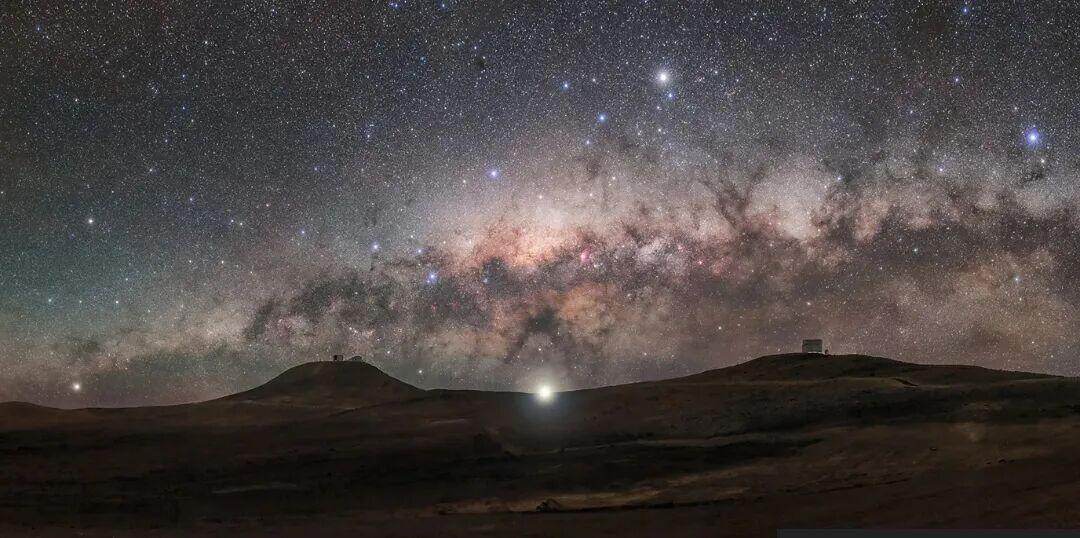
Looking up at the starry sky at night is not only beneficial to our physical and mental health, but it can also help us understand our place in the universe.
