

How long has it been since you last saw fireflies carrying their little lanterns?
Thinking about it seriously, it seems that natural scenes of twinkling fireflies in the night are becoming increasingly rare. Many people have never even seen a firefly in person – and indeed, fireflies are becoming fewer and fewer. It's so rare that it makes one wonder: when we read ancient poems and idioms like "light silk fan swatting at fireflies" and "studying by the light of fireflies," will we only be able to imagine the scene, without any real, personal memory of it?
In fact, fireflies face the same predicament as most creatures – habitat loss severely impacts their survival. But what you might not know is that light pollution at night is the second biggest threat to firefly populations worldwide.
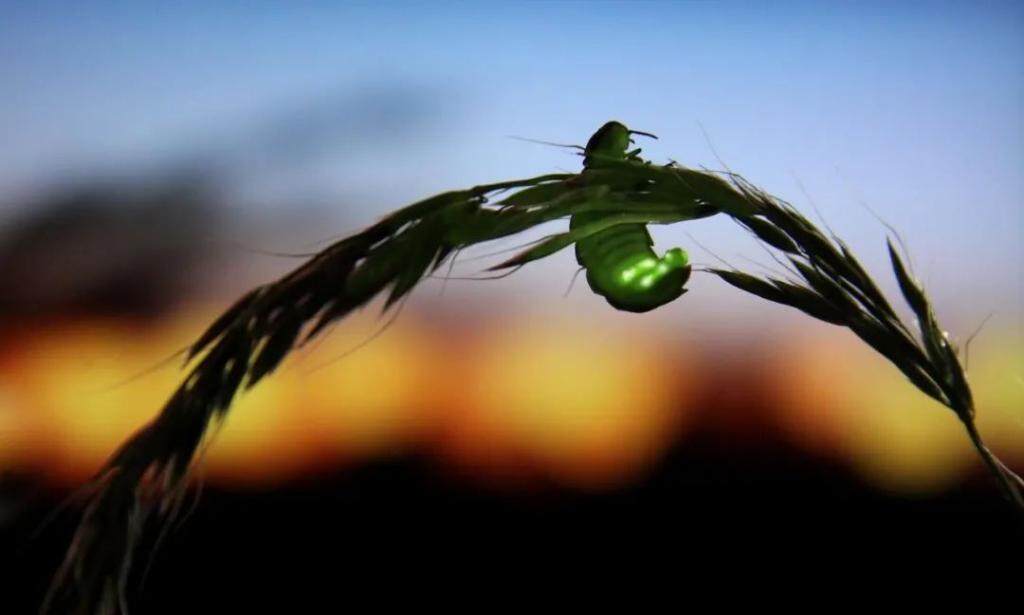
▲(Image source: dailymail)
Light pollution silences fireflies
In academia, nighttime light pollution has its own name: ALAN (Artificial Light At Night). With continuous economic development and increasingly bright lights, ALAN has become one of the ecological problems facing the world. Conservative estimates suggest that 23% of the Earth's land surface suffers from varying degrees of nighttime light pollution. Before humans lit up the night sky with artificial lights, only celestial bodies like the moon and stars, and bioluminescent creatures like fireflies, adorned the darkness.
Now, convenient lighting illuminates our lives, but what is sweet for us is poison for them. Unexpectedly, increasingly bright lights have brought disaster to fireflies. 49 scholars from different countries who study fireflies conducted a comprehensive assessment of firefly populations in various regions around the world, concluding that light pollution from excessive nighttime lighting is making the survival of fireflies precarious.
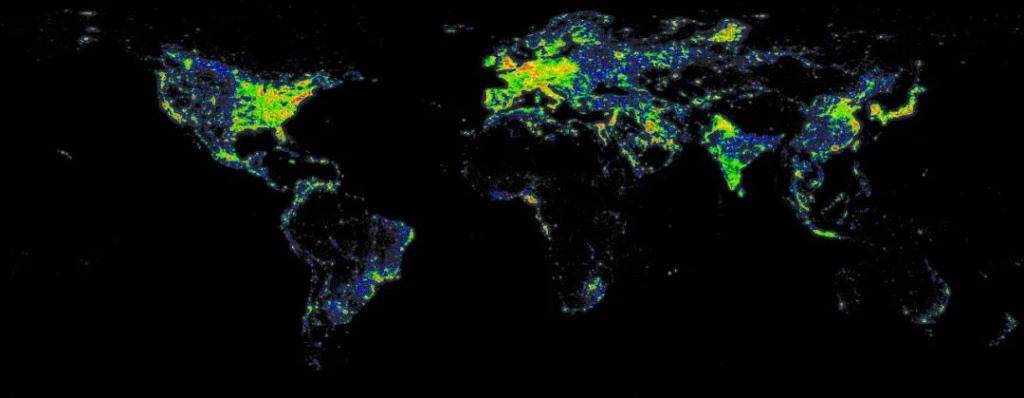
▲Global nighttime light pollution map
The direct impact of nighttime lighting on fireflies is that it reduces their activity frequency. A field experiment confirmed this conclusion – a study in the Brazilian countryside found a significant decrease in the number of fireflies after light exposure. Even under the weakest direct light intensity (equivalent to the light intensity of a full moon, approximately 0.0438 lux), the local *Photinus* fireflies were only half as active as in the absence of light (sample plot 3 in the image below). Parallel experiments with varying light intensities showed that as the light intensity increased, the fireflies became increasingly "shy," with the most intense light group (sample plot 1 in the image below) showing less than 10% of their original activity after light exposure.
Even if they weren't too shy to come out due to the light, fireflies active under nighttime lighting still face difficulties because light also affects their mating behavior. After sunset, male fireflies begin their courtship, and the specific flashing frequency we see is actually their romantic language of expressing love. The flashing frequencies vary among different species, but they are unique love messages in the eyes of the opposite sex of the same species.
Worse still, light pollution makes the expression of firefly love language inaccurate. After being affected by light, the male's flashing parameters change; for example, both the frequency and intensity will be different. At this point, these love messages become strange and incomprehensible words in the eyes of the female!
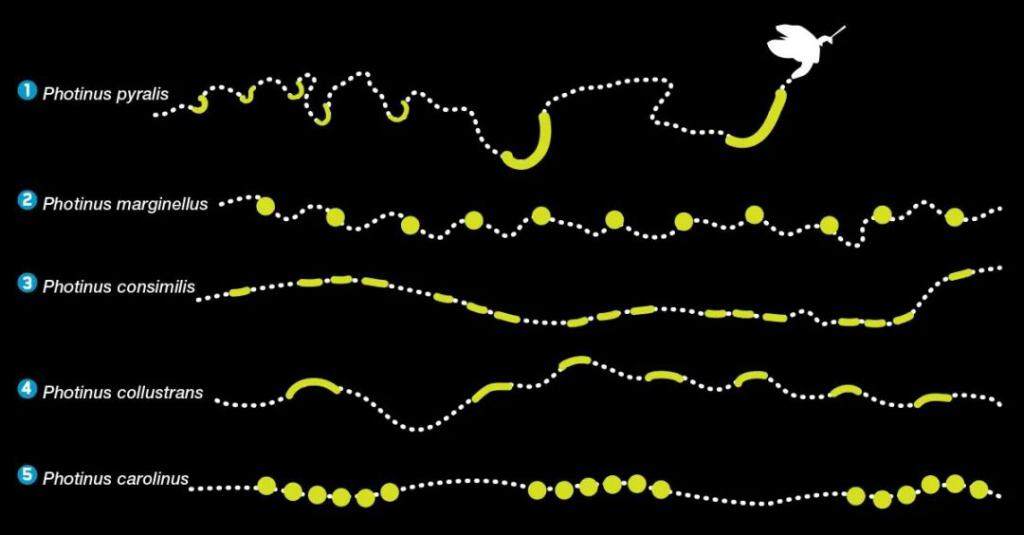
▲ Flashing frequencies of five male firefly species
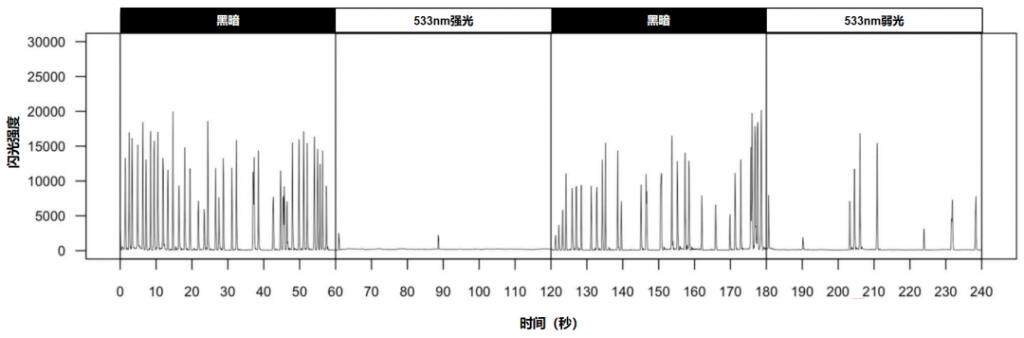
▲ Light changes the flashing parameters of male *Aquatica ficta* fireflies
Furthermore, light "persecutes" fireflies regardless of gender; in addition to males, females are also affected. After a male firefly emits a flashing signal of love, if the female is interested, she will respond with a specific frequency of flashes to reciprocate the affection and indicate acceptance of the courtship. However, light pollution can also alter the female's flashing frequency.
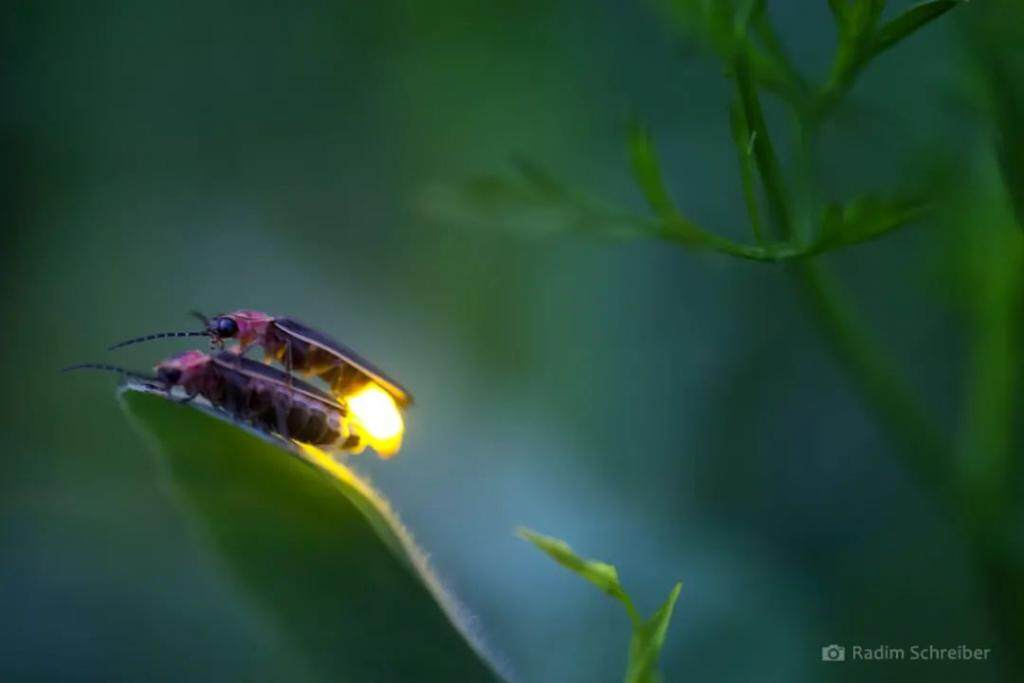
▲Accurate flashing signals are essential for firefly reproduction.
For example, in the firefly species Photinus obscurellus, the female's normal response flash should consist of five patterns, but under strong red light, the female can only emit a single, isolated flash. In this case, the language of love fails for both sexes; the male and female can no longer understand each other's courtship signals. This unique and beautiful courtship method loses its effectiveness, potentially leading to a reproductive dead end.
▲The impact of light on the flashing frequency of male and female Photinus obscurellus fireflies
How to reduce the impact of light pollution on fireflies?
With nighttime light pollution becoming increasingly severe, the Fireflyers International Network (FIN) has launched an initiative calling for measures such as reducing unnecessary nighttime lighting and modifying lighting equipment to minimize the negative impact of ALAN (Artificial Light at Night) on fireflies.
While fireflies are rarely found in cities, and therefore not directly affected by urban light pollution, the combined effect of various strong light sources in cities creates a type of pollution called skyglow (a type of ALAN). Skyglow has a wide range of influence, even illuminating suburban areas and affecting fireflies in the surrounding environment.
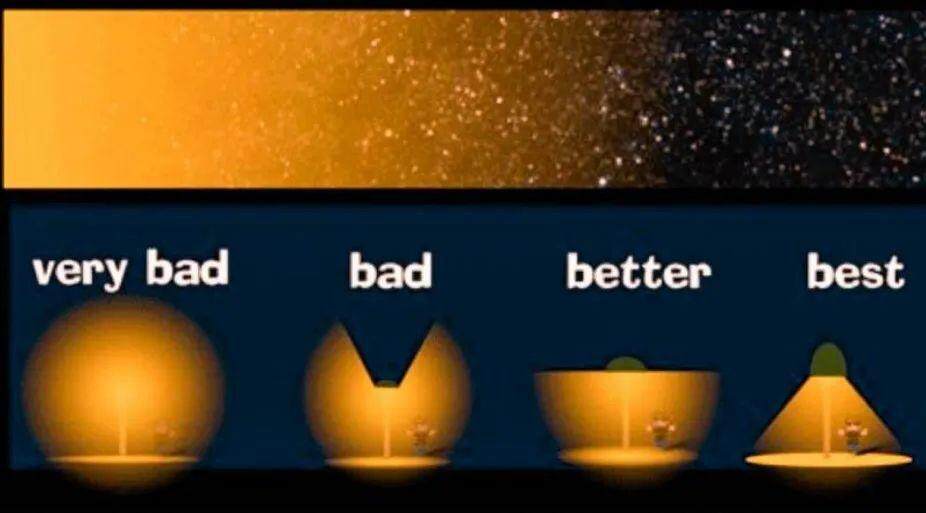
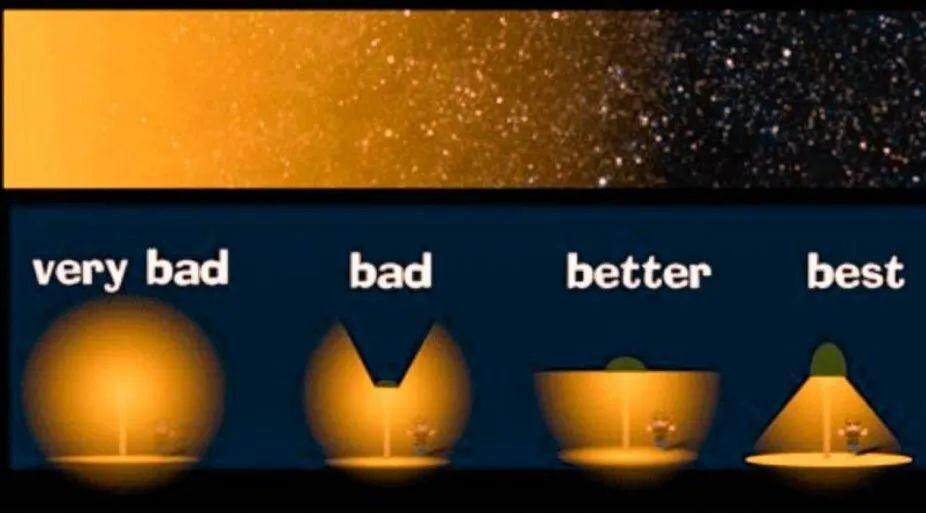
Simple modifications to lighting facilities can reduce the impact of skyglow. For example, adding a cover to omnidirectional light sources or appropriately lowering the light source position can minimize upward light dispersion without affecting residents' lives.
▲ Simple and effective methods for urban lighting improvement
For people living in suburbs or rural areas, where there may be suitable ecological environments for fireflies, daily light sources can be replaced with sound-activated or timed lights. This can significantly reduce the direct impact of light on fireflies. A more practical suggestion is to replace traditional light sources such as sodium and mercury lamps with LED new energy lamps, as the latter are more energy-efficient and durable.
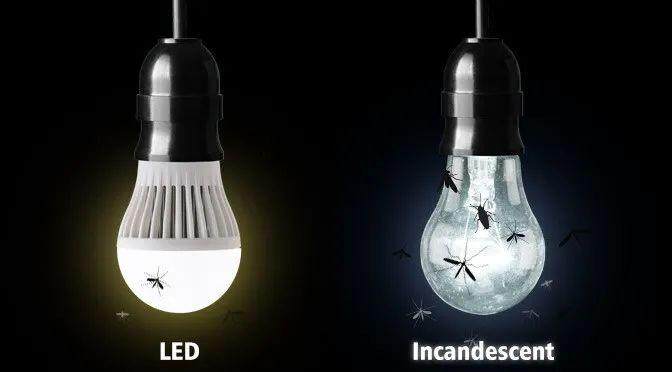
In addition to economic advantages such as low energy consumption and long lifespan, LED lights also have better ecological benefits – because the wavelengths emitted by traditional sodium and mercury lamps attract a large number of nocturnal insects, moths being a typical example. In contrast, LED lights have a smaller overall impact on nocturnal insects, and significantly fewer insects are attracted to them.
▲ Fewer moths attracted to LED lights
Humans are also victims of light pollution
The interference of light pollution on living organisms is comprehensive and widespread. Besides fireflies, other animals (such as moths, bats, birds, and amphibians) and even plants are negatively affected by excessive nighttime lighting. Of course, humans are no exception; long-term light pollution can harm various physiological and psychological activities, including sleep, mood, and endocrine function.
Whether humans or various animals and plants, as part of nature, we have not fully adapted to this era of night skies as bright as day. In today's increasingly technologically advanced world, how to allow those animals and plants that have adapted to life in darkness for millions of years to continue to thrive is one of the issues that we, as part of nature, should consider.
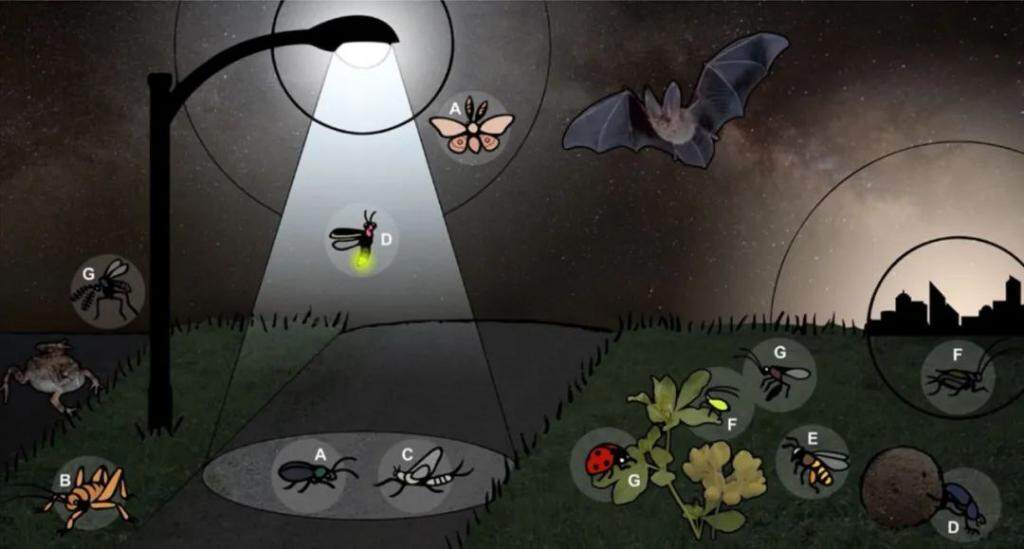
▲ Nature, which is also bustling at night, has its rhythm disrupted by excessive lighting
