
South Africa has recently fully upgraded its mandatory energy efficiency standard for general service lamps (GSLs)—"Energy Efficiency and Functional Requirements for General Service Lamps (GSLs) – VC 9109"—with the stringent technical requirements of Phase 2 becoming officially mandatory as of May 23, 2026. Issued by South Africa's Department of Trade, Industry and Competition on May 23, 2023, this regulation was implemented in two stages; the Phase 1 rules took effect on May 23, 2024. With the conclusion of the two-year transition period, the South African lighting market has officially entered an era of higher energy efficiency standards, establishing a new compliance benchmark for global companies exporting lighting products to the country.

The VC 9109 standard was introduced to replace two older regulations—VC9091 (single-capped fluorescent lamps) and VC8043 (incandescent lamps)—thereby unifying market access rules for general service lamps. It aims to drive upgrades in energy efficiency and quality for local lighting products while phasing out outdated, high-energy-consuming products through mandatory regulation. The standard applies to the vast majority of mainstream general service lighting products on the market, including directional and non-directional lamps with bulb-shaped or bulb-enclosure structures. The product categories encompass a full range of technologies—including traditional incandescent, halogen, and fluorescent lamps, as well as currently mainstream LED bulbs—while high-pressure gas discharge lamps are explicitly excluded from the scope of regulation.
Regarding basic parameter limits, compliant lamps entering the South African market must meet several mandatory criteria: they must be compatible with DC or 50Hz AC power supplies, with a maximum operating voltage not exceeding 300V; the luminous flux must fall within the range of 60 to 3,300 lumens; and color coordinates must comply with the standard's defined spectral range for general lighting. Regarding lamp bases, the standard is compatible with mainstream global types, including screw bases (E11, E14, E27), bayonet bases (B15d, B22), pin bases (G4, GU10, GX53), and R7s interfaces; it also permits the use of commercial passive adapters to accommodate variants of these bases, thereby maximizing compatibility with existing market product forms.

Energy efficiency metrics constitute the core distinction between the two regulatory phases, clearly signaling South Africa's intent to progressively raise the threshold for luminous efficacy. The first phase, effective from May 23, 2024, to May 23, 2026, mandates a minimum luminous efficacy of 90 lm/W for all general-purpose lighting bulbs, allowing the market and enterprises sufficient time for product iteration and production capacity adjustments. The second phase, commencing on May 23, 2026, imposes stricter requirements by raising the minimum efficacy to 105 lm/W; this significant tightening of standards effectively bars low-efficacy traditional light sources from the South African market, compelling companies to increase investment in high-efficiency lighting technology R&D.
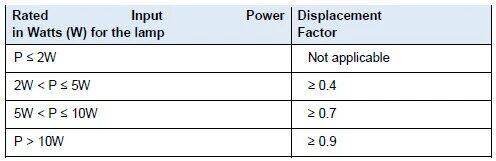
Beyond core efficacy requirements, VC 9109 establishes detailed specifications for electrical performance and standby power consumption. The standard defines parameters for the displacement factor and sets a unified power consumption cap for smart and networked bulbs: both standard standby power and networked standby power are limited to a maximum of 0.5 W. Crucially, these limits cannot be aggregated, a measure designed to prevent companies from circumventing regulations through functional segmentation and to reinforce energy-saving controls at a granular level. Furthermore, the standard incorporates comprehensive functional performance requirements, setting quantitative benchmarks for metrics such as color rendering index (CRI), flicker, color tolerance, and service life, thereby ensuring a high-quality user experience and operational stability.
As a major economy in Southern Africa, the country’s lighting standards exert significant regional influence; the full implementation of VC 9109 will not only reshape the local lighting market landscape but also serve as a reference for standard-setting in neighboring African nations. For the vast number of domestic lighting exporters, the upgrading of this standard necessitates a new round of self-inspections and product enhancements for their non-export business lines. Industry experts advise manufacturers to systematically review product specifications against the new standard—prioritizing the optimization of core metrics such as luminous efficacy and standby power consumption for key export products like LED bulbs—and to complete testing and certification in advance. Taking these steps will help mitigate trade risks, such as cargo detention or customs clearance delays caused by non-compliance, and secure market share in Africa.
Looking ahead, as global green energy-saving policies continue to advance, increasingly stringent lighting energy efficiency standards across various countries will become the norm. The phased upgrade approach of South Africa’s VC 9109 standard serves as a wake-up call for the industry; only by persisting in technological innovation and focusing on the R&D of high-efficiency products can lighting enterprises successfully adapt to the constantly evolving trade regulations worldwide.
