
Reprinted from: Current Lighting
In early April, as project delivery cycles continued to shorten, a trade policy, largely unreported by mainstream media, quietly took effect. While its short-term impact appeared mild, it is profoundly reshaping the cost structure of the lighting industry. On April 6th, the U.S. federal government, based on Section 232, comprehensively adjusted tariffs on imported steel, aluminum, and copper products, significantly extending the scope of taxation to various finished products. For lighting companies like Lighting People, this policy change was not the focus of public attention, but its tangible tax changes directly impacted their business operations and accounting.
This adjustment, issued as a presidential proclamation, redefined the tariff calculation rules for core categories in the lighting and electrical industry chain: raw materials such as steel, aluminum, and copper remain subject to a 50% tariff rate, while derivative products, encompassing the vast majority of lighting fixtures and electrical components, are uniformly subject to a 25% tariff based on the total product value. This shift in taxation method has become the core trigger for changes in industry costs.
The impact of the old and new tax systems on business costs is extremely direct: Previously, a lamp worth $100 with metal components worth $20 only incurred a $10 tariff on the metal parts; under the new policy, the same lamp will be subject to a $25 tariff based on its total value, resulting in a significant increase in the tax burden. For lighting companies that import in bulk, this shift in taxation logic has an immediate cumulative cost effect, significantly squeezing overall profit margins.
The tariff adjustment covers the entire lighting industry chain, with virtually no exceptions. Core commercial lighting components such as wire conductors, wiring harnesses, and metal casings are explicitly classified as derivative products. From heat dissipation modules and mounting brackets to internal wiring and external metal casings, the material composition of lighting products closely aligns with the new policy's definition of metal-intensive goods. Even some large-scale lighting systems and grid-connected lighting equipment are expected to be subject to a 15% tariff until 2027, with no room for full exemption.
For lighting manufacturers and importers, the new policy brings pervasive operational risks. The buffering effect of the origin-based preferential policies is extremely limited. This tariff adjustment has a broad scope and very few exempted categories. Previous strategies of circumventing tariffs by adjusting assembly locations are significantly less effective under the new rules that levy tariffs based on product categories, making it difficult for companies to reduce their tax burden through geographical relocation.
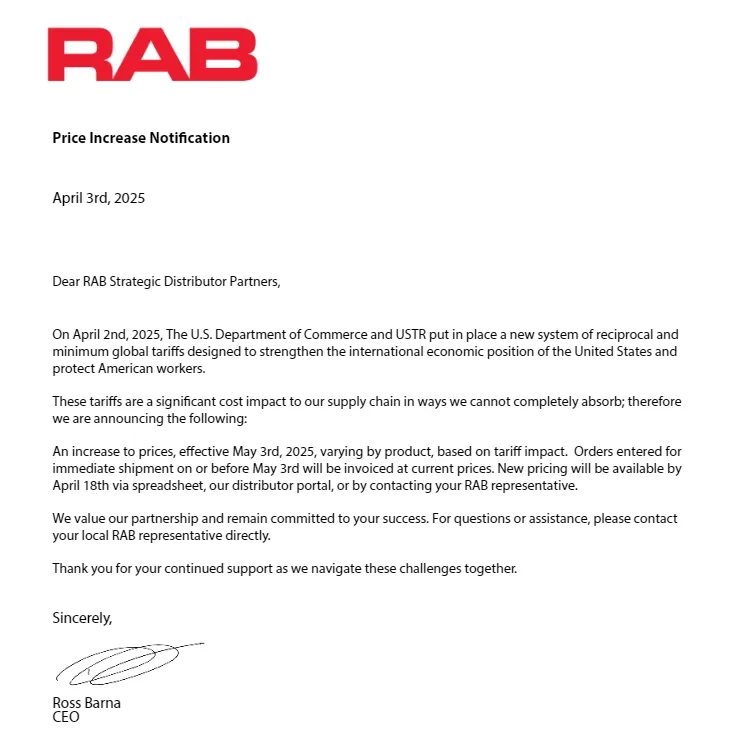
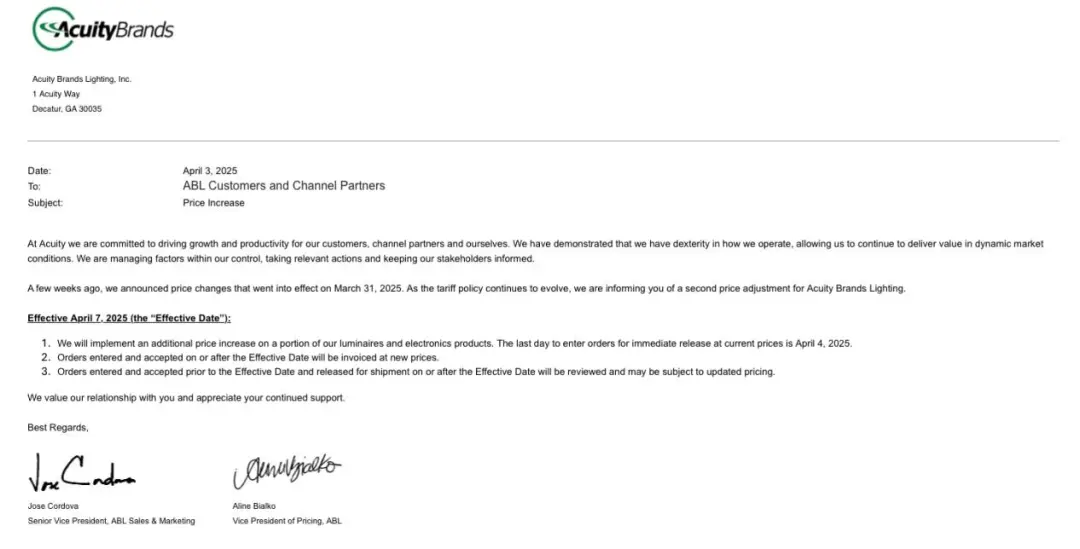
The concentrated release of cost pressures is accelerating the adjustment of industry supply chain strategies. The immediate implementation of the policy left lighting companies with almost no buffer time to adjust, forcing manufacturers to recalculate product costs in real time. Faced with rigid cost increases, some companies have already initiated price adjustment plans, while many more are struggling to balance profit margins and market prices in the fierce market competition. Lighting distributors and engineering contractors have already felt the chain reaction of cost increases from the latest price lists and project budget adjustments.
At the same time, the stability and predictability of the lighting supply chain have been significantly reduced. The new policy eliminates the pre-approval process for tariff adjustments on derivative products, meaning future tariff increases will not require prior notice. Procurement plans and supply chain layouts originally based on a stable policy environment now face greater uncertainty and risk.
It is worth noting that the new policy also sends a targeted signal for industrial guidance: products made with metals produced in the United States can enjoy a 10% tariff preference, which has a significant cost advantage; products with a metal weight ratio of less than 15% are exempt from tariffs. This rule is prompting lighting companies to accelerate the exploration of coping strategies such as product design optimization, material alternatives, and category adjustments, and the industry's supply chain and product development logic are ushering in a new round of restructuring.
