

On April 9th, Magna, a global automotive parts giant, announced a major deal to sell its global lighting and roof systems businesses through three separate transactions.
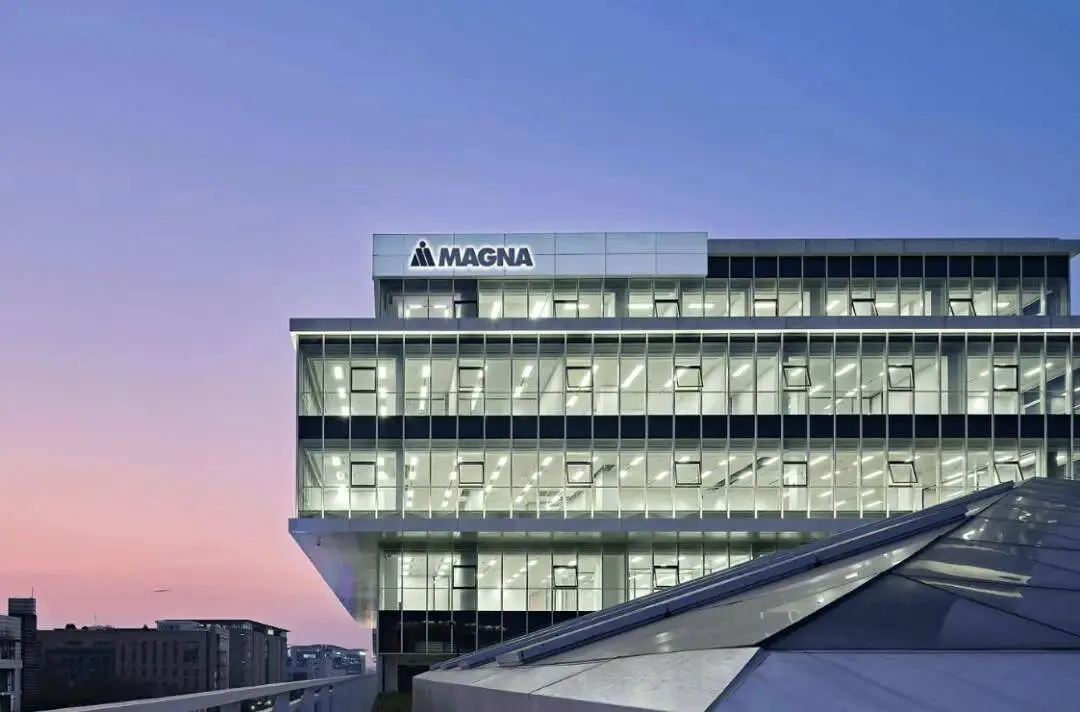
This asset transaction, involving annual sales exceeding $1.1 billion and expected to close in the second half of 2026, is not only a landmark event in the restructuring of the global automotive supply chain but also brings profound structural changes and industry insights to the automotive lighting industry, which is currently undergoing a critical period of intelligent transformation.
I. Core of the Transaction: Regionalized Split Sale, Clear Strategic Objectives of Both Buyer and Seller
From the transaction details disclosed by Magna, this asset sale adopts a clear regionalized splitting approach, and the integration direction of the target assets is also very clear.
Magna's lighting business was globally spun off through two transactions: a global investment firm acquired Magna's lighting business in North America, South America, and China, covering all categories of headlights and taillights; German private equity group Mustares took over its European lighting business, which is projected to generate approximately $235 million in revenue by 2025. This business will be integrated into Mustares' platform, achieving deep integration of exterior modules and advanced lighting technologies to create an integrated exterior system platform.
Simultaneously, Mustares also acquired Magna's automotive roof systems business through a separate transaction, planning to integrate it with its existing hinge and locking system technologies to build integrated roof and exterior system solutions. Data shows that Magna's global sales for lighting are approximately $1 billion in 2025, and its roof systems business is projected to generate approximately $100 million in sales; both businesses belong to its Powertrain & Vision division.
The strategic objectives of the buyer and seller in this transaction were drastically different. Magna has explicitly stated that this move is a core initiative to proactively optimize its business portfolio, and that it will continue to focus on core businesses that drive long-term growth and improve profit margins. Meanwhile, the acquiring company, Mustares, views this acquisition as a crucial step in building a large-scale automotive business platform. It plans to enhance per-vehicle added value and OEM service capabilities by integrating complementary capabilities in exterior trim, lighting, and roof systems, paving the way for a mid-term capital exit.
II. Behind the Giant's Sell-Off: The Competitive Logic of the Automotive Lighting Sector Has Been Completely Rewritten
As one of the world's top three automotive parts giants, Magna's proactive divestiture of its lighting business, which generates over $1 billion in annual revenue, is not a random asset disposal, but rather an inevitable result of the fundamental changes in the automotive lighting industry's underlying logic under the wave of new energy vehicle adoption.
In the era of traditional gasoline-powered vehicles, the core attribute of automotive lighting was safety functionality. Leading international automotive parts suppliers, with years of automotive-grade certification, optical technology accumulation, and global supply capabilities, firmly held a dominant market position; large-scale manufacturing was the core competitiveness.
However, in the era of intelligent electric vehicles, automotive lighting has evolved from a single functional lighting component into an intelligent light system integrating intelligent driving interaction, vehicle body aesthetic design, and scenario-based experiences. New technologies such as pixel-style headlights, interior and exterior light interaction, and ADAS-integrated lighting are rapidly iterating. The core of industry competition has shifted from hardware manufacturing capabilities to comprehensive technical capabilities encompassing optical design, software algorithms, chip integration, and system fusion.
This transformation has directly restructured the industry's profit logic. For Magna, the lighting business requires continuous and substantial R&D investment to keep pace with technological iterations, yet its global market share continues to be squeezed. Especially in the Chinese market, local companies such as Xingyu Optoelectronics, Huayu Vision, and Mande Optoelectronics have secured core positions in the domestic new energy vehicle supply chain thanks to their rapid response to the needs of new energy vehicle manufacturers, lower manufacturing costs, and continuous technological breakthroughs. The cost disadvantages and responsiveness shortcomings of international giants are being amplified, making it difficult for the profit margins and growth potential of the lighting business to match Magna's core strategic requirements.
Meanwhile, the restructuring of the global automotive supply chain is also challenging the traditional "large and comprehensive" model of large manufacturers. Magna, a major auto parts manufacturer with complete vehicle manufacturing capabilities, covers multiple areas including body, chassis, powertrain, and intelligent driving. During this critical period of intelligent transformation in the industry, it must focus its resources and capital on high-growth, high-barrier core sectors such as electric drive and intelligent driving. Divesting its sluggish and increasingly competitive lighting business has become an inevitable choice for optimizing its business portfolio.
III. Reshaping the Landscape: Integration and Localization Become Two Core Trends in the Lighting Sector

Magna's asset sale not only changed the global automotive lighting industry's market landscape but also clearly indicated two core directions for the industry's future development, offering significant reference value for the Chinese lighting industry.
First, integrated system integration capabilities have become a core competitive barrier in the automotive lighting industry.
Mutares' core operating logic in this acquisition was to break down the category boundaries of lighting, exterior, and roof systems, creating an integrated exterior system platform through integration. This confirms a core trend in industry development: the single-component lighting supply model has gradually reached its end, and OEMs' demands on suppliers have shifted from "providing single products" to "providing integrated system solutions."
For lighting companies, future product competitiveness will no longer solely depend on light source and optical design capabilities, but rather on the ability to deeply integrate lighting systems with vehicle exteriors, intelligent driving systems, and cockpit systems. This integrated design will enhance product differentiation and per-vehicle added value. Lighting is no longer an independent automotive component, but a core part of the vehicle's intelligent interaction system and aesthetic system. This cross-industry integration capability will become a watershed moment in future corporate competition.
Secondly, the Chinese market has become a key variable in the global automotive lighting landscape, and localized competition has entered a new stage.
In this transaction, Magna's separation and separate sale of its China lighting business from its European and American markets underscores the strategic importance of the Chinese market in the global automotive lighting industry. China is already the world's largest new energy vehicle market and a core hub for innovation and application of intelligent automotive lighting technology. Over 60% of global new energy vehicle production and sales are concentrated in China, and its supporting automotive lighting supply chain has formed the world's most complete industrial cluster.
The investment institutions' acquisition of Magna's China lighting business is not merely a financial investment; it undoubtedly reflects their recognition of the growth potential and localized support opportunities in the Chinese market. In the future, this asset will most likely undergo localized capital operations and business integration. The strategic contraction of international giants also creates greater market space for Chinese domestic lighting companies, presenting new opportunities for both import substitution in the domestic market and overseas expansion.
IV. Industry Implications: The Breakthrough Path for Chinese Lighting Companies

Magna's sale of its automotive lighting business does not signify a downturn in the industry; on the contrary, it marks a shift from an era of large-scale manufacturing to an era of technology-driven, high-quality development. For the Chinese lighting industry, this event offers four core development insights:
First, completely abandon the mindset of simple hardware manufacturing and focus on the core technologies of intelligent lighting. Competition in the automotive lighting industry has fully entered the era of "light intelligence," where pixel control, algorithm fusion, automotive-grade chips, and intelligent interaction technologies have become core competitive advantages. Domestic companies must continuously increase R&D investment, overcome core technology shortcomings, and transform from "lighting manufacturers" to "intelligent light system solution providers" to gain a foothold in global competition.
Second, proactively break down category boundaries and build integrated solution capabilities. The future automotive supply chain will be won through system integration, not just individual products. Domestic lighting companies need to move beyond the traditional mindset of "only making lights," strengthening collaboration with automotive exteriors, intelligent driving, and other fields. They must proactively develop integrated technologies, build end-to-end system solution capabilities, and enhance product added value and customer loyalty.
Third, seize the opportunities presented by global supply chain restructuring and rationally advance international expansion. The strategic contraction of leading international manufacturers has created opportunities for Chinese lighting companies in overseas markets for mergers, acquisitions, collaborations, and supporting projects. Domestic companies can leverage their accumulated technological, cost, and supply chain advantages in the new energy vehicle market to systematically advance their globalization, while remaining vigilant against geopolitical and regulatory risks to achieve steady and solid international development.
Fourth, effectively utilize capital tools to promote industry chain integration and upgrading. Both Mustares' capital operation logic and the investment institutions that took over its China operations highlight the core role of capital in industry consolidation. Domestic lighting companies should leverage the power of the capital market to conduct mergers and acquisitions along the upstream and downstream of the industry chain, quickly addressing shortcomings in technology, channels, and production capacity. Simultaneously, they should adhere to their original industry goals, focusing on technological innovation to drive high-quality development of the industry.
Overall, Magna's sale of its automotive lighting business is a microcosm of the global automotive industry's transformation towards new energy and intelligent technologies. The traditional industry landscape is being fundamentally disrupted, and a new industry order is rapidly taking shape. For China's lighting industry, this presents both a challenge and a crucial window of opportunity to leap from "global follower" to "global leader." Only by focusing on core technologies, embracing integration trends, and seizing opportunities can Chinese automotive lighting companies forge their own path to success in the global industrial restructuring.
