

I. Basic Principles of Light Emission (The Core Logic of White Light to Violet Light)
Conventional white LEDs themselves only emit blue light. White light is synthesized by a blue LED chip and a yellow silicon-based phosphor coating:
The LED chip emits blue light at approximately 450nm;
A portion of this blue light is absorbed by the yellow phosphor bonded to the silicon surface of the chip, converting it into yellow light;
The remaining transmitted blue light mixes with the converted yellow light, resulting in the standard white streetlight appearance to the human eye.
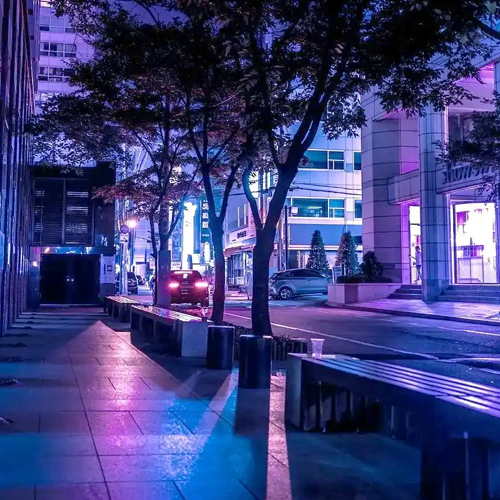
When the phosphor layer peels off/delaminates, the yellow light disappears, leaving only the original blue light, which appears bluish-purple or violet to the naked eye.
II. Root Cause of Failure: Defects in Mass Manufacturing Process
1. Core Failure Point: Delamination of Phosphor Silicone Adhesive (LSRC Alliance 2024 Test Conclusion)
The failed lights are concentrated in the AEL (Acuity) Autobahn series streetlights, mass-produced between 2017 and 2019, widely procured and installed in North America.
The defect is not in the yellow phosphor raw material, but in the substandard formulation of the silicone adhesive that fixes the phosphor to the LED chip.
Long-term outdoor temperature differences between day and night, lamp heat generation, UV exposure, and road and vehicle vibrations accelerate the aging and cracking of the adhesive layer, leading to the complete peeling of the phosphor layer (delamination).
The lights began to change color gradually after 3-4 years of use (lights installed in 2018 → a concentrated outbreak of purple light failures in 2021).
2. Environmental Factors Accelerating Aging
High-temperature thermal cycling, UV aging, and mechanical vibration amplify the adhesive defect, resulting in batches of lights turning purple: some streetlights on the same road section turn white while others turn purple, depending on the progress of adhesive layer peeling.
III. Debunking Rumors (All False Speculations)
❌ Not intentionally designed for energy conservation or wildlife-friendly lighting;
❌ Not anti-domestic violence commemorative lighting or anti-drug lighting;
✅ Pure component failure; no intentional design intent.
IV. Widespread Affected Areas
United States: 30+ states (California, Wisconsin, Illinois, Florida, Massachusetts, etc.; Milwaukee: over 300 lights failed in batches in 2018);
Overseas Spread: Simultaneous failure of the same model of purple lights in multiple cities across Canada and parts of Ireland, caused by the export of the same batch of defective lights;
Timeline: First concentrated exposure in 2021; continued addition of faulty lights in 2024–2025; cities replacing lights in batches; purple lights appearing intermittently.
V. Two Major Real-World Impacts
1. Road Safety Hazards (Authoritative Reminder from Traffic Management and the Illumination Society of America)
The sharp drop in the violet color rendering index (CRI) worsens the color discrimination of objects and reduces the visibility of road obstacles, increasing the risk of theft and traffic accidents. California residents have been burglarized after their streetlights turned purple, and they strongly oppose keeping violet streetlights.
Short-wave blue light is glaring and causes visual fatigue, interfering with driver visibility, with even higher risks on highways.
2. Unexpected Artistic Outbreak
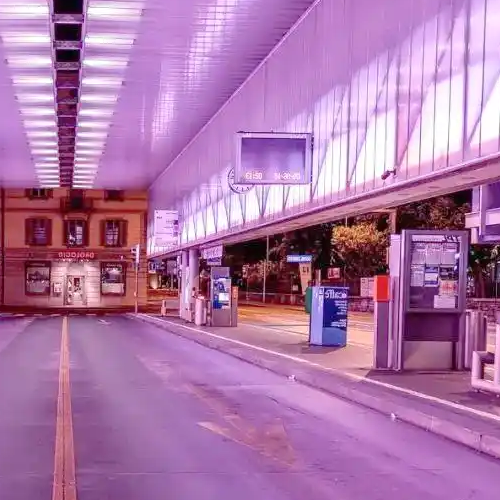
The cyberpunk-inspired purple nightscape has been photographed by photographers and art students, turning the abnormal malfunction into a niche urban landscape. However, municipalities continue to replace faulty LED modules in batches for safety reasons.
VI. Follow-up Actions
City governments across the US continue to allocate funds to gradually phase out defective batches of streetlights. Manufacturers are bearing part of the replacement costs. The remaining undamaged and intact lights can continue to emit normal white light. In the short term, some neighborhoods may still see sporadic purple streetlights.
