

This article aims to provide readers with a deeper understanding of the characteristics, advantages, disadvantages, and differences between incandescent, fluorescent, energy-saving, and LED lights, enabling them to make more informed decisions when purchasing lighting products.
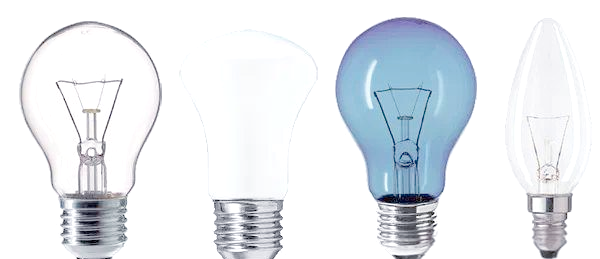
Incandescent lamps, also commonly known as light bulbs, primarily rely on the heat generated by an electric current passing through a filament (usually made of tungsten wire with a melting point exceeding 3000 degrees Celsius). This spiral filament continuously accumulates heat, raising its temperature to over 2000 degrees Celsius. At this high temperature, the filament emits bright light, much like red-hot iron. Notably, the higher the filament temperature, the brighter the emitted light. Therefore, the name "incandescent lamp" is quite apt. However, during this conversion process, most of the electrical energy (potentially over 99%, though the exact percentage is unverified) is converted into heat energy, with only a very small portion converted into light energy.
Furthermore, incandescent lamps emit full-spectrum light, but the proportions of different colors are affected by the luminescent material (such as tungsten) and temperature. This imbalance in proportions leads to a deviation in light color; therefore, the colors of objects observed under incandescent lamps may not be accurate. Simultaneously, the lifespan of an incandescent lamp is also affected by the filament temperature. The higher the temperature, the easier it is for the filament to sublimate. When the tungsten filament sublimates to a certain extent, its resistance increases when electricity is applied, making it more prone to burnout and thus shortening the bulb's lifespan.
Fluorescent lamps, also known as daylight lamps, work on a principle that can be briefly described as follows: A fluorescent tube is a sealed gas discharge tube, primarily composed of argon gas, with small amounts of neon or krypton, and trace amounts of mercury. When the gas discharges inside the tube, mercury atoms release ultraviolet light, with a primary wavelength of 2537 angstroms. Approximately 60% of the electrical energy is converted into ultraviolet light in this process, with the remainder converted into heat. This ultraviolet light is then absorbed by the fluorescent material on the inner wall of the tube and converted into visible light. Different types of fluorescent materials emit different colors of visible light. Generally, the efficiency of converting ultraviolet light into visible light is about 40%. Therefore, the overall efficiency of fluorescent lamps is approximately 24%, roughly twice that of tungsten filament lamps of the same wattage.
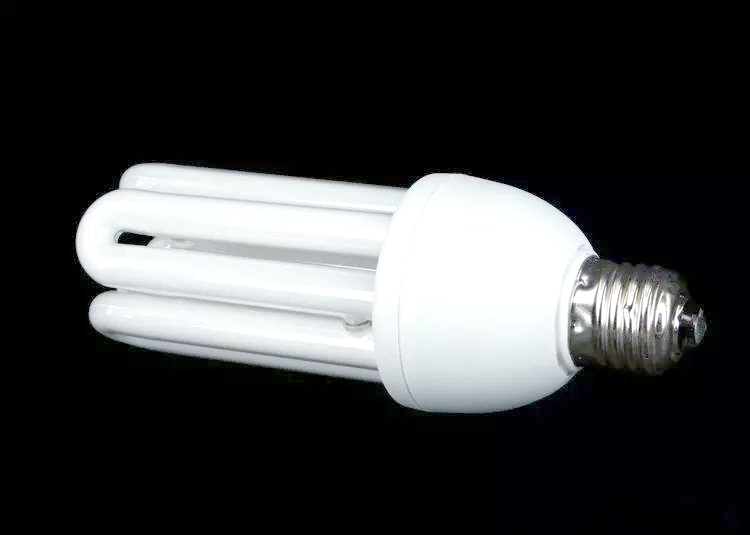
Energy-saving lamps, also known as compact fluorescent lamps (often abbreviated as CFLs internationally), are widely favored due to their high luminous efficacy (5 times that of ordinary light bulbs), significant energy savings, long lifespan (up to 8 times that of ordinary light bulbs), compact size, and ease of use. Their working principle is quite similar to that of fluorescent lamps.
Furthermore, energy-saving lamps are not only available in cool white; warm white options are also available. At the same wattage, energy-saving lamps can save up to 80% of energy compared to incandescent bulbs, while extending their lifespan by 8 times and emitting only 20% heat radiation. Typically, a 5-watt energy-saving lamp provides the same illumination as a 25-watt incandescent bulb, a 7-watt one is equivalent to 40 watts, and a 9-watt one is close to 60 watts.
LED lamps, or light-emitting diodes, are a highly efficient solid-state semiconductor lighting technology. They utilize semiconductor chips to directly convert electrical energy into light energy without thermal conversion, thus greatly improving energy efficiency. The core component of an LED light is the chip, in which P-type and N-type semiconductors provide holes and electrons, respectively, while the quantum well is responsible for photon generation. When an electric current flows through a wire onto the chip, electrons and holes are pushed into the quantum well and recombine, releasing energy in the form of photons, thus enabling the LED's lighting function.
With its compact size, low energy consumption, long lifespan, and environmentally friendly characteristics, LED lights are increasingly widely used in the lighting industry. From initial outdoor decorative and engineering lighting to today's residential lighting, LED lights have become an important representative of modern lighting technology.
