
As twilight faded completely from the Gothic spires of Rouen Cathedral in Normandy, a light show titled "Wildflowers in Full Bloom" illuminated the facade of this tallest Gothic building in France, running until September 26th. This season, the cathedral's facade welcomed two "narrators": Mika Ninagawa's "Wildflowers in Full Bloom," and "First Impression," a tribute to Impressionism. The two projection shows alternated, and were free to the public.
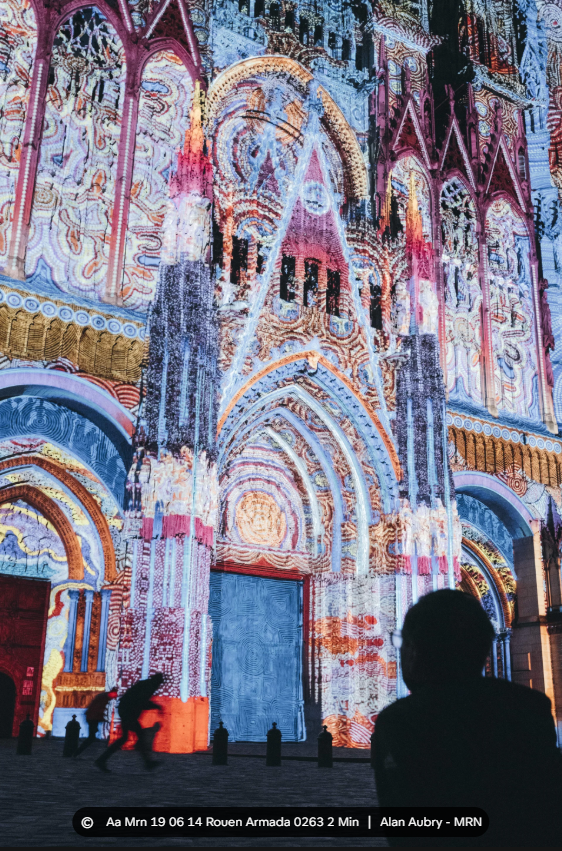
This choice itself constitutes an interesting contrast—Impressionism was profoundly influenced by Japanese Ukiyo-e prints, while Mika Ninagawa reinterpreted French antiquity from the perspective of contemporary Japanese aesthetics. The visual grammar of East and West achieved a kind of "homecoming" on this stone facade, originally built in the 12th century.
Flowers, Neon Lights, and Gothic Stone
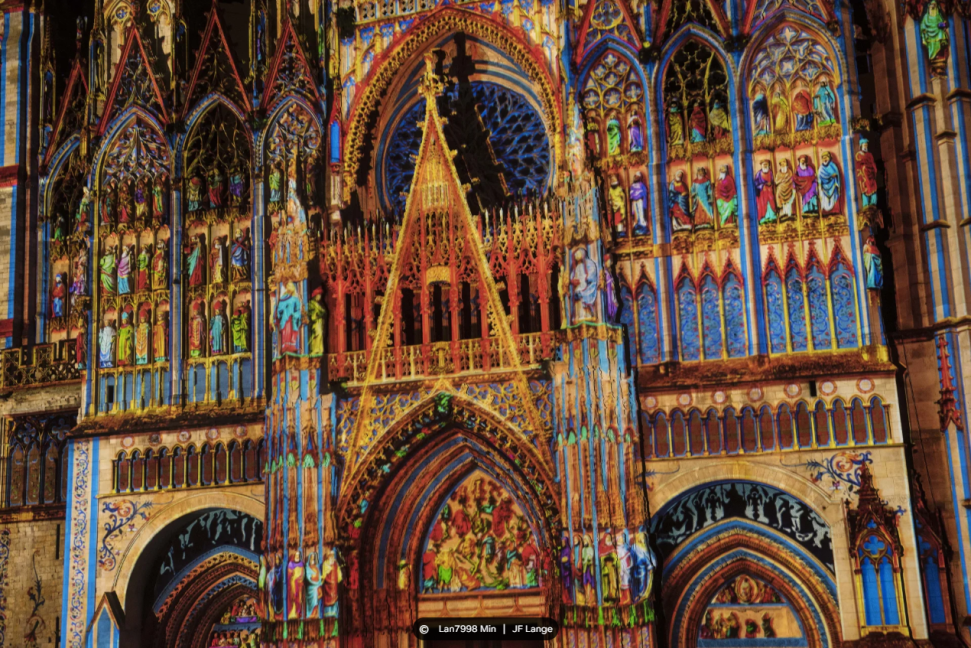
Mika Ninagawa is known for her highly saturated floral visual language. In *Wildflowers in Full Bloom*, her signature style is projected onto the facade, arches, and rose windows of a cathedral. Spectacular giant flowers cover the entire west facade of the building, creating a striking dialogue between the intense colors and the exquisite details of the Gothic stone carvings.
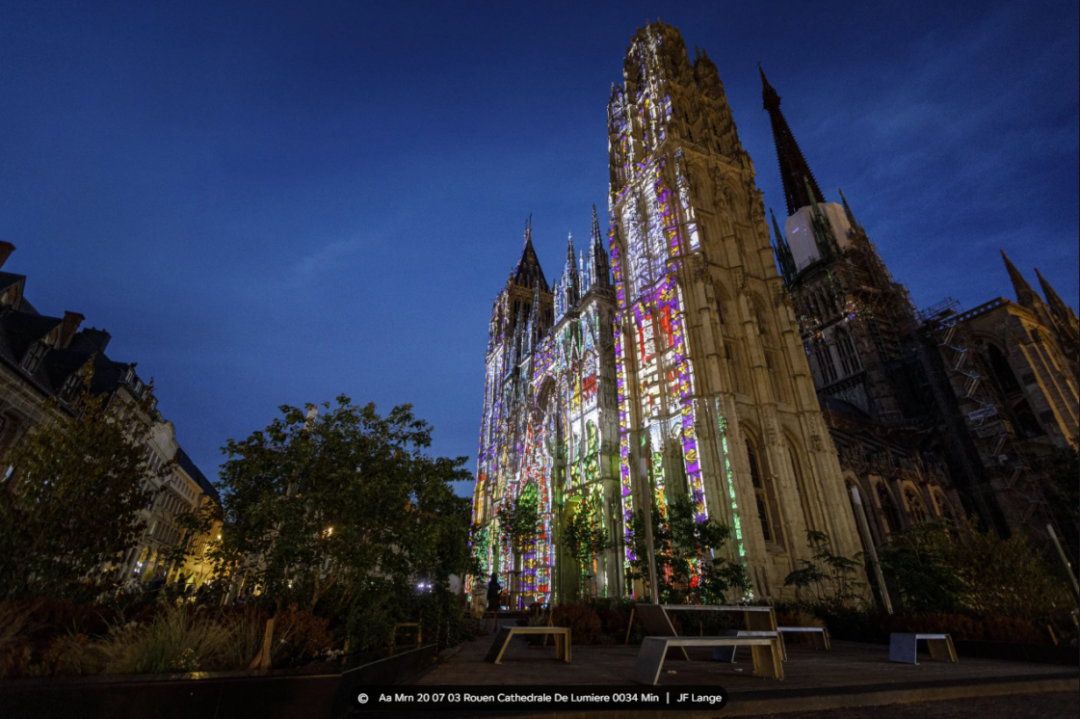
It is noteworthy that this dialogue is based on a technological foundation. The architectural projection mapping technology used in the light show utilizes the vertical ribs, horizontal flying buttresses, and recessed porticoes characteristic of Gothic architecture as a "natural canvas." The light no longer merely covers a flat surface but flows, turns, and fills the openwork areas along the texture of the stone. The decorative elements of Ninagawa's work, derived from the 17th-century Rinpa aesthetic, combined with the energy of Tokyo neon lights, are translated into waves and blocks of light, adhering to the same walls that Monet depicted over thirty times.
From a lighting perspective, the light and color strategy of *Wildflowers in Full Bloom* leans towards "full coverage" and "overlay"—using extremely high color saturation and large-area application to cover the original gray tones of the building, creating an almost surreal visual effect. This forms a stark technical contrast with the subsequent performance of *First Impression*.
The Brushstrokes of Light and Shadow: The Lighting Grammar of *First Impression*
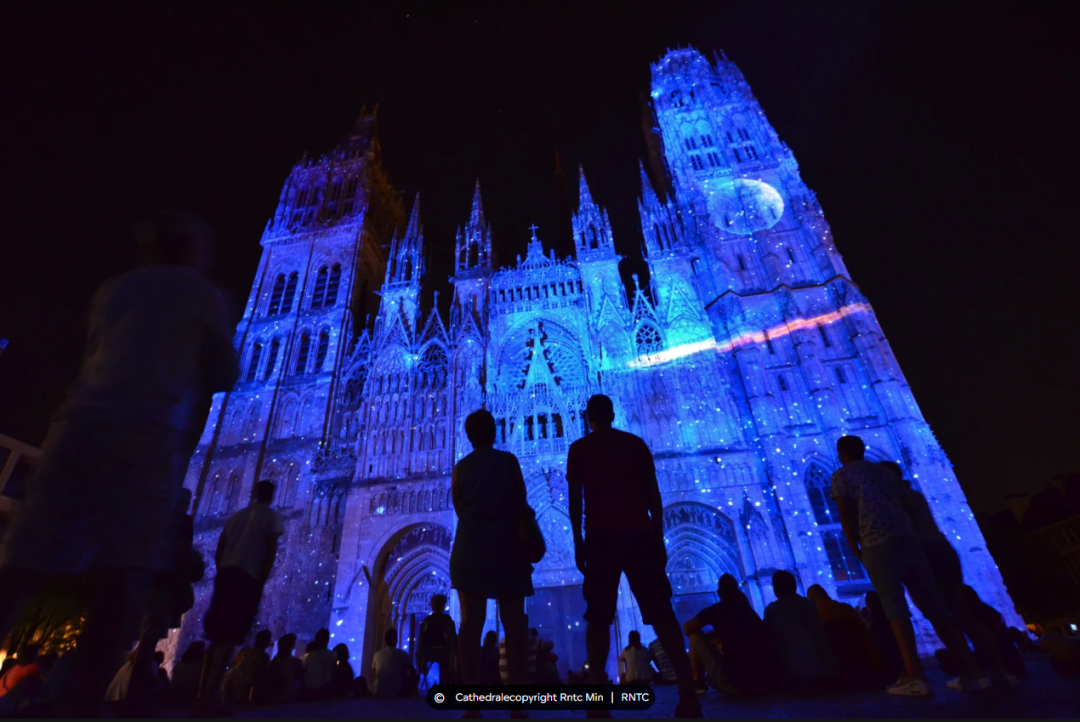
As a regular feature of the Rouen Light Festival, *First Impression* continues the narrative tradition of paying homage to Impressionism. The work transforms the cathedral facade into a dynamic canvas: elements such as water lilies, the Giverny Bridge, and the Normandy cliffs with crashing waves appear alternately.
From a lighting design perspective, this program's light and color strategy differs significantly from "Wildflowers in Bloom." It uses lower saturation and more complex transitions between light and shadow to simulate the "changes in light and shadow at different times" in Impressionist paintings. The cathedral facade is treated to appear sometimes shrouded in shadow and sometimes bathed in light, with reflections on the water and multicolored mirrors giving the heavy stone walls a sense of "transparency" and "movement." One segment, paying homage to Renoir, even transitions the image from Impressionism to Pointillism, and then slides towards digital art. Light is a tool to simulate brushstrokes, not the subject that covers everything.
Summary
Because the performance was free, large crowds began gathering in the cathedral square from evening. The performance itself transcended an artistic event, becoming a public ritual of the city's summer—citizens and tourists sat on the cobblestones, waiting together in the evening breeze for the light to illuminate the millennia-old stone. For the lighting industry, this level of public participation may be more telling than the projected area or equipment parameters: light, as the highest standard of evaluation for public art, is sometimes the density of people spontaneously gathering.
