

Lighting Encyclopedia: From Selection to Specifications, Understand All Lighting Knowledge in One Article
If you're preparing to purchase lighting equipment but are clueless about various technical terms and parameter selection, don't worry! This lighting encyclopedia will break down all the core knowledge points, explaining key concepts such as light color, energy efficiency labels, lumens, and ballasts in simple terms. If you still have questions after reading, you can also refer to our other blog posts for more detailed answers.
I. Ballasts
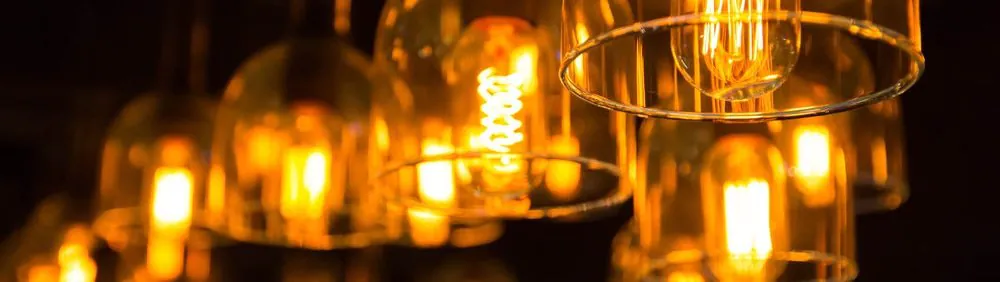
The ballast is the core power supply component of a lighting fixture. Its core function is to provide a stable power supply to the fixture while limiting the current to prevent damage from excessive current. Lighting equipment such as fluorescent tubes and gas discharge lamps must be used with a ballast. Some energy-saving lamps, LED bulbs, and lighting fixtures also require a ballast to operate.
Currently, mainstream ballasts are divided into three categories: traditional inductive ballasts (EM), high-frequency electronic ballasts (HF), and LED drivers specifically designed for LEDs. To learn more about the differences between different ballasts and their suitable application scenarios, please check out our blog posts.
II. Beam Angle
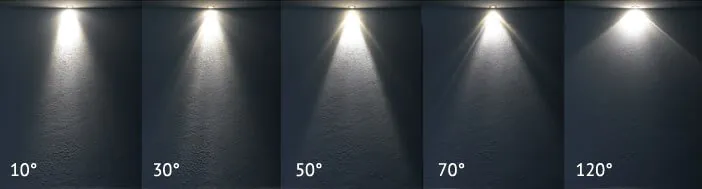
The beam angle determines the width of the light diffusion from the light source, and its selection directly relates to the intended lighting purpose:
Wide beam angle: Extensive light diffusion, suitable for basic general lighting in living rooms, bedrooms, etc., and is preferred for spaces with low ceilings.
Narrow beam angle: Concentrated light, suitable for focused lighting of artwork, decorative items, etc., and is more adaptable to spaces with high ceilings.
Unsure which beam angle to choose for your home? Our blog has a detailed selection guide.
III. Bulb and Socket (Accessories)
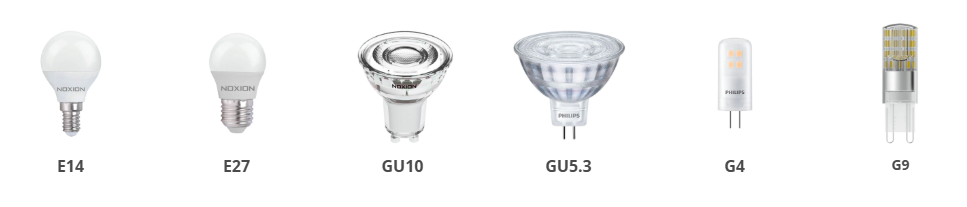
The socket is the connecting part at the bottom of the bulb, responsible for connecting the bulb to the power supply interface. Different bulbs require specific sockets; be sure to confirm the model number before purchasing.
The numbers on the lamp holder indicate the core size parameters:
* **Screw-type lamp holders (E series):** The number indicates the lamp holder diameter (millimeters). For example, the most common household lamp holder, E27, has a diameter of 27mm; the smaller E14 is often used in chandeliers and wall lamps.
* **Plug-in type lamp holders (GU/G series):** The number indicates the pin spacing (millimeters). For example, GU4 (4mm), GU5.3 (5.3mm), GU10, G4, and G9 are commonly used models.
IV. Color Coding
The color code is a combination of color rendering index (CRI) and color temperature, printed as three digits on the product packaging and name:
* **First digit:** Represents the CRI (e.g., 8 indicates a CRI > 80);
* **Last two digits:** Represent the color temperature (e.g., 30 indicates 3000K).
Example: Code 830 means a CRI > 80 and a color temperature of 3000 Kelvin.
V. Color Rendering Index (CRI)
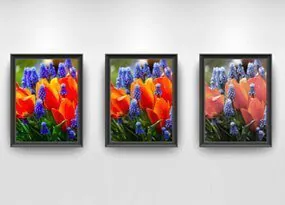
The CRI measures a light source's ability to accurately reproduce the true colors of objects, with a maximum score of 100.
Household Standard: All commercially available household light sources must have a CRI higher than 80.
Professional Applications: For art, merchandise, and food lighting, it is recommended to choose lamps with a CRI > 90 for more realistic and natural color reproduction.
VI. Color Temperature
Color temperature determines the warm or cool tone of light, directly affecting the atmosphere and usage scenario. The unit is Kelvin (K). The lower the value, the warmer the light; the higher the value, the cooler the light:
1800-2700K, 3000K: Warm white light, soft and gentle, suitable for creating ambiance in living rooms and bedrooms;
3500K-5000K: Cool white light, bright and clear, suitable for studies, kitchens, and offices;
6000K-6500K: Daylight color, close to natural daylight, suitable for scenarios requiring focused work.
Adjustable White Light VS Adjustable Color Temperature (CCT)
Adjustable White Light: Allows for freely setting any color temperature value between 2700K and 6500K, supporting manual/automatic all-day gradual change;
Adjustable Color Temperature (CCT): Only allows selection of fixed color temperature values (e.g., 3000K, 4000K, 6000K), requires manual switching, and lacks automatic gradual change function.
Want to precisely match the color temperature of each room? Our dedicated blog will help you choose the right one in one stop.
VII. Dimmable Lighting
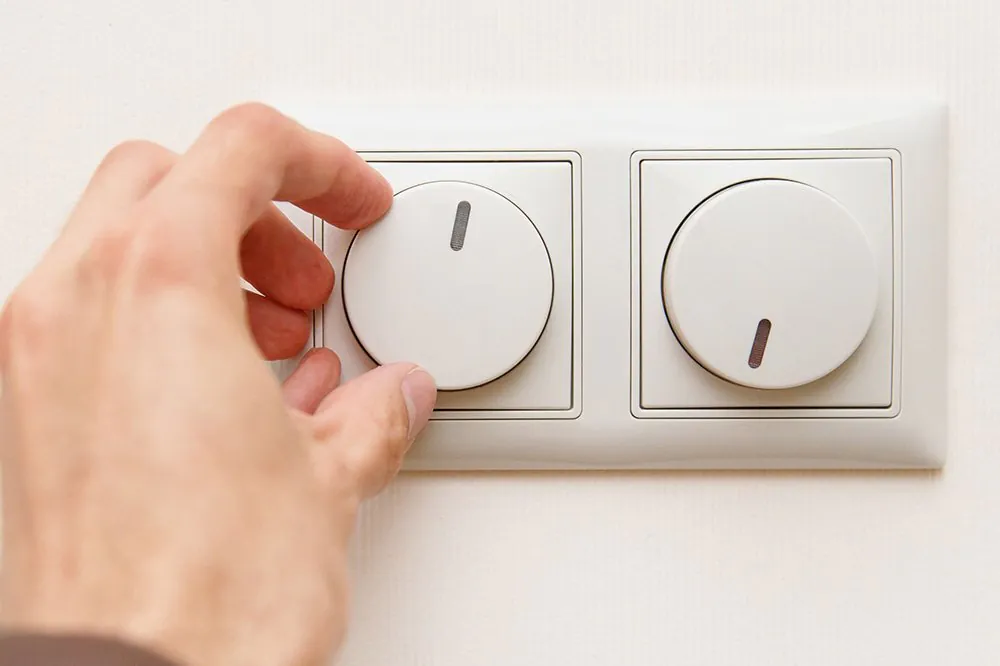
Dimming is adjusting the brightness of light. The principle is to control the current passing through the bulb—the higher the current, the higher the brightness; the lower the current, the lower the brightness. Some dimmable bulbs can also adjust the color temperature simultaneously.
Dimming requires special accessories: LED bulbs are recommended to be paired with LED-specific dimmers; if a dimmer is not available, smart bulbs are the best solution, easily dimming via an app or remote control.
VIII. DC and AC Power
These are two basic power supply methods. Their core differences and applicable scenarios are as follows:
Direct Current (DC): Electrons flow in one direction only, voltage 12V, suitable for low-voltage lighting fixtures with GU4 and GU5.3 sockets;
Alternating Current (AC): Electrons flow in both directions, voltage 230V (European household socket standard), suitable for conventional lighting fixtures with GU10 and E27 sockets.
Important Reminder: 12V low-voltage lighting fixtures cannot be directly connected to 230V AC mains power; a transformer is required to convert the voltage.
IX. Energy Efficiency Labels
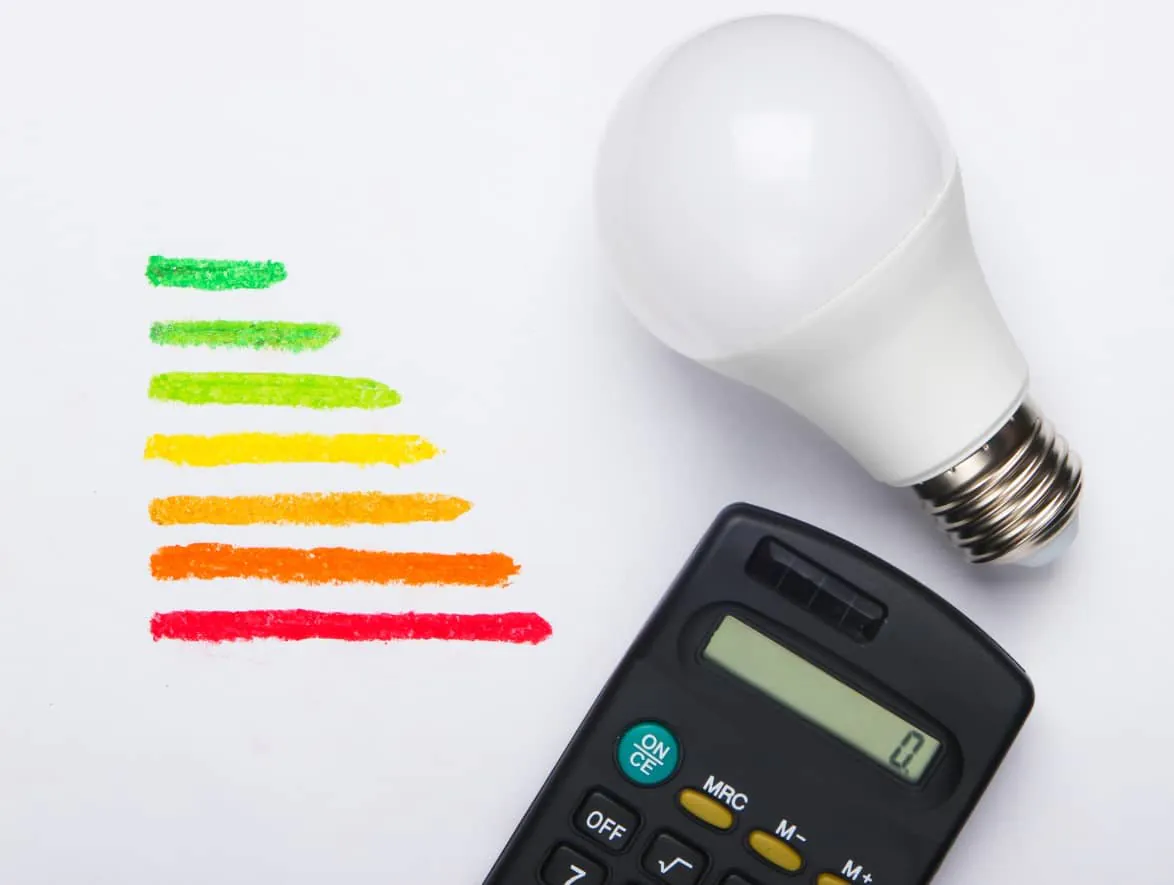
Starting in September 2021, the new energy efficiency label was officially implemented, replacing the old A++ to E ratings. Energy efficiency is categorized from high to low as A-G. Currently, the vast majority of LED lighting products on the market have energy efficiency ratings of B, C, and D, which are the preferred energy-saving options. For a detailed explanation of the new label, please refer to our special blog post.
10. Energy Efficiency QR Code
Starting in 2021, light bulbs with the new energy efficiency label all have a unique QR code printed on their packaging. Scanning the code allows for quick access to official information such as core product parameters and energy efficiency details.
11. IP Protection Rating and IK Shock Resistance Rating
These are the environmental protection standards for lighting fixtures, determining their applicable scenarios:
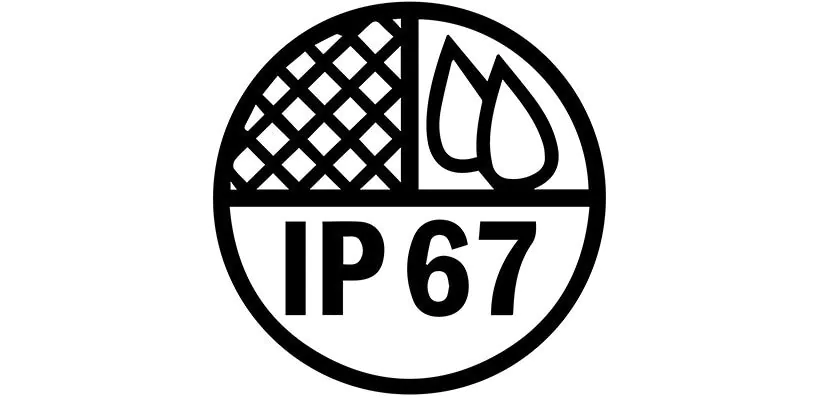
IP Rating (Dustproof and Waterproof): Consists of two digits, the first for dustproof and the second for waterproof. Example: IP66 = Full dustproof + Resistant to strong water jets; IP65-IP68 are commonly used for outdoor lighting, while bathroom lighting fixtures require a minimum of IP44;
IK Rating (Shock Resistance): A single digit. The higher the value, the stronger the fixture's impact and abrasion resistance.
Specific ratings and their corresponding protective effects can be viewed in the comparison table on our product details page.
XII. LED Lighting
LEDs, or Light Emitting Diodes, operate on a different principle than traditional lamps, offering significant advantages:
* **Extra-long lifespan:** An average of 15,000-100,000 hours, far exceeding incandescent bulbs (1,000 hours), halogen bulbs (4,000 hours), and energy-saving lamps (20,000 hours);
* **Extreme energy saving:** Saves 70% more energy than traditional lamps, significantly reducing electricity bills in the long run;
* **Environmentally friendly and safe:** Contains no harmful substances such as mercury, is recyclable, and emits no ultraviolet radiation;
* **Cost-effectiveness:** While the initial purchase cost is slightly higher, the extra-long lifespan and energy-saving effect make it more cost-effective in the long run.

XIII. Bulb Lifespan
Lamp lifespan is measured in hours. LED lights are currently the longest-lasting lighting product, with specific lifespans varying depending on the brand and model. For example, an office LED panel light, used for 9 hours a day, 5 days a week, with a 50,000-hour lifespan, can be used continuously for over 20 years.
14. Lumens (Luminous Flux)
Lumens are a unit of measurement for the total luminous output (visible light) of a light source; simply put, it's the "total brightness" of a light bulb. Before the widespread adoption of LEDs, people were used to choosing brightness by wattage, but wattage only represents power consumption, not brightness. When choosing LED lights, the key is to look at the lumen value, not the wattage.
15. Luxes (Illuminance)
Luxes differ from lumens; they measure the actual amount of light illuminating an object's surface. The lux value marked on a light fixture usually refers to the illuminance of the brightest area at the center of the beam.
16. Lighting Recycling
Used or damaged light bulbs/fixtures should be sent to professional recycling centers or environmental protection stations for processing. Most countries offer free recycling (product prices already include environmental taxes). Light sources contain rare earth metals and recyclable electronic materials; older fluorescent lamps contain mercury. Professional recycling avoids harmful substances polluting the environment and achieves resource reuse.
17. RGB Lighting
RGB lighting can be adjusted to produce a full range of rainbow colors, supports customizable color gradations and lighting effects, and can be easily operated with a remote control or app, making it suitable for creating ambiance and decorating spaces. To learn about RGB lighting design and selection, please check out our dedicated blog post.
18. Sensors
Sensitive lighting is suitable for large buildings, corridors, outdoor spaces, and other scenarios where constant illumination isn't required. Sensors automatically detect environmental changes and switch lights on and off accordingly. Main types include:
High-frequency sensors: Precisely detect minute movements without requiring direct eye contact, suitable for offices, schools, and security lighting;
Dusk sensors: Detect natural light intensity, turning lights on at dusk and off at dawn, automatically adapting to day and night lighting;
Motion sensors: Require direct eye contact to detect moving objects, with a highly sensitive response;
Passive infrared sensors: Detect differences in body temperature and movement in humans/animals, energy-efficient and accurate.
19. Transformers
12V low-voltage lighting fixtures cannot be directly connected to 230V AC power. A transformer is required to convert the voltage from 230V AC to a compatible 12V. Transformers come in traditional and electronic versions. If dimming is required, a dimmable transformer must be selected. To learn about transformer selection and installation, please check out our dedicated blog post.
20. Ultraviolet (UV) Light: Traditional lighting technologies mostly emit ultraviolet (UV) light, which can cause objects to fade and age, making them unsuitable for illuminating artwork, food, and office furniture. UV light is only used for pool sterilization, sunbathing, and scientific research. LED lights contain no UV light and are safe to use.
21. Voltage (V): Voltage is a unit of measurement for power supply intensity. The standard voltage for household sockets is 230V, and most light fixtures are directly compatible with 230V. 12V low-voltage light fixtures require a transformer to convert the voltage to avoid damage from direct connection.
22. Watt (W): Watt is a unit of power consumption, not brightness! Traditional light fixtures are often perceived as "the higher the wattage, the brighter the light," but LED lights can achieve high brightness with very low wattage. Therefore, when choosing LED lights, you don't need to focus on the wattage; just look at the lumen output.
