

When I first watched *Avatar*, the image of the massive, glowing "Tree of Souls" on the planet Pandora left an impression on me that remains vivid to this day.
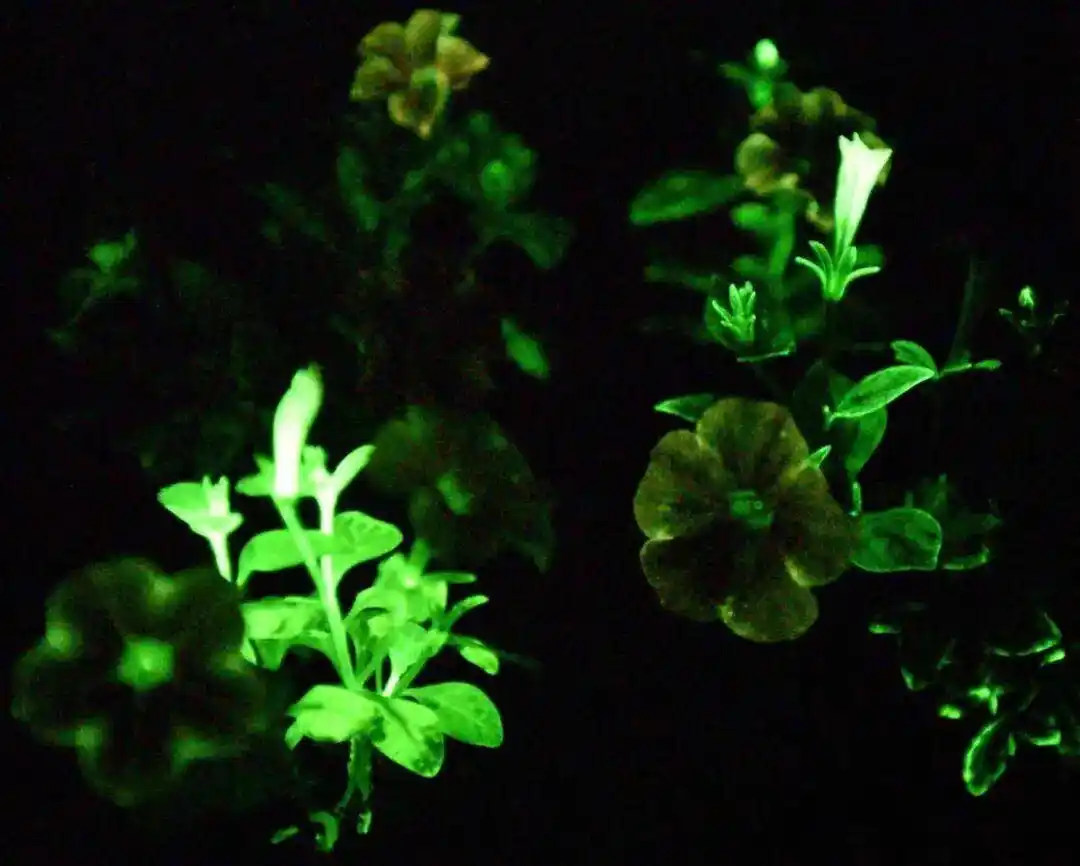
Now, a scenario once confined solely to the realm of science fiction films has become a reality.
Recently, a Chinese biotechnology company successfully inserted the bioluminescent genes of fireflies and glowing mushrooms into plant genomes, cultivating genetically modified plants capable of emitting visible light in the dark.
Currently, this technology has been applied to over 20 different plant and flower species—including orchids, sunflowers, and chrysanthemums—and made a high-profile debut at the 2026 Zhongguancun Forum.
**Equipping Plants with a "Luminous System"**
According to news reports, the inspiration for cultivating these self-illuminating plants stemmed from the company founder's childhood experiences growing up in the countryside.
"I was born in a rural village. We were quite poor back then, so at night, I would often lie in a hammock within my grandfather's bamboo grove to cool off. Fireflies would frequently land on my arm, and I would intently observe these tiny, glowing insects."
Years later, while conducting genetic research, he was suddenly struck by the idea of transferring the firefly's bioluminescent genes into sunflowers.
His concept was simple: if plants could glow at night, they could serve as streetlights—illuminating the city without the need for electricity—while also acting as a "healing presence" within the urban landscape.
Consequently, he assembled a team and began researching bioluminescent plants.
As for how these flowers generate their own light, the underlying principle is identical to that of fireflies: bioluminescence. Both fireflies and bioluminescent fungi rely on the enzyme luciferase acting upon specific light-emitting molecules to release visible photons. This conversion process is nearly 100% efficient; unlike light bulbs, it generates no heat, producing what is known as "cold light."
Researchers successfully isolated the specific gene sequences responsible for these chemical reactions. By utilizing gene-editing technology to integrate these genes into plant genomes, they were able to create flowers that glow brilliantly even in the dead of night.
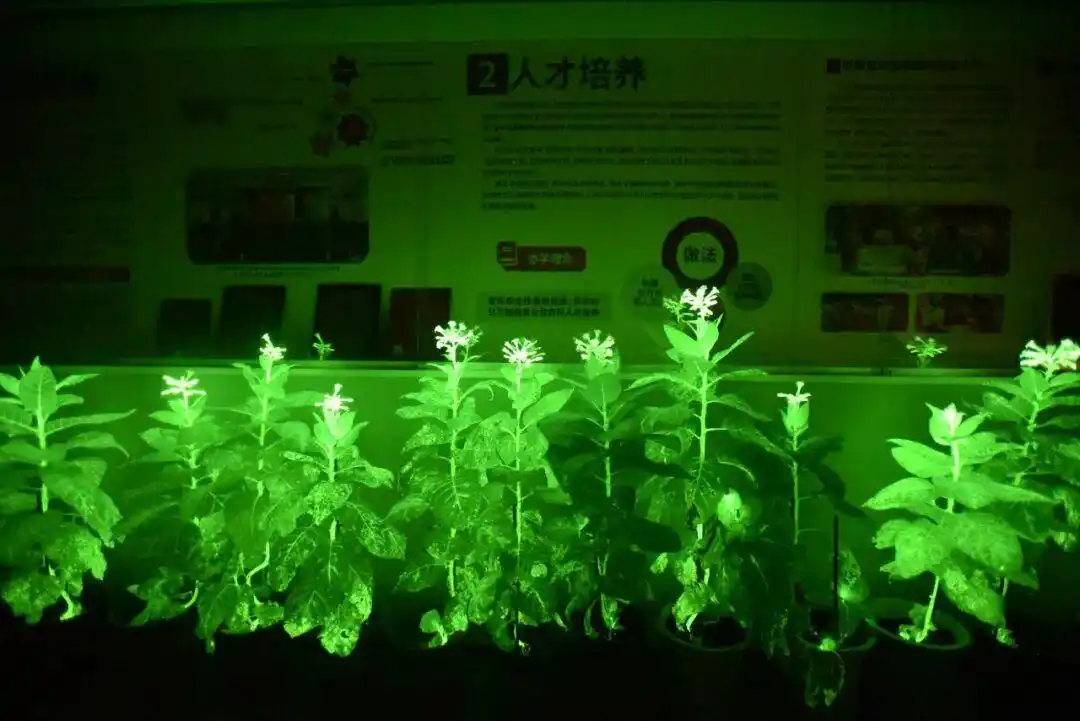
Bioluminescent mushrooms (Order Agaricales, Family Mycenaceae)
The bioluminescent flowers cultivated using this technique require no special care or external light sources; they rely entirely on their own biological mechanisms to glow, and they continue to emit light throughout their entire life cycle.
Since they are the product of genetic integration, this bioluminescent trait is heritable; such organisms are referred to as "stably transformed bioluminescent plants" (an explanation of which can be found at the end of this text).
If one were forced to identify a drawback, it would be that these bioluminescent plants currently lack color variety; most are capable of emitting only a soft, glowing green light.
Succulents emitting multicolored light
On August 27, 2025, Chinese scientists published an article in the journal *Matter*, announcing the successful creation of the first multicolored succulent plant capable of "recharging" simply by being exposed to sunlight.
Unlike the bioluminescent flowers mentioned earlier, these glowing succulents do not involve genetic engineering.
Their ability to glow stems from the researchers' injection of micron-sized "afterglow particles" into the plant's leaves.
These afterglow particles—also known as Persistent Luminescence Nanoparticles—possess a unique property: they can store energy from external light sources. Even after the external light source is removed, the particles continue to emit light for a sustained period. Many glow-in-the-dark toys operate based on this very principle. Afterglow particles composed of different chemical elements and materials are capable of emitting light in various colors.
Luminous Plant Wall
To ensure that the light emitted by the succulents was both uniform and bright, researchers selected a common indoor succulent—the *Echeveria*—for this study. After injecting afterglow particles into each individual leaf, the plants were exposed to sunlight for just a few minutes; subsequently, they continued to glow for up to two hours.
Scientists also discovered that using particles with a diameter of approximately 7 micrometers yielded better results—specifically, brighter light—than using particles at the nanoscale.
To test the brightness levels, the scientists constructed a "succulent green wall" featuring a linear arrangement of 56 modified succulents. In total darkness, the combined light generated by these plants was sufficient to allow a person to clearly discern text and images placed directly in front of them.
If the light begins to dim after an extended period, simply exposing the plants to sunlight again allows them to "recharge" and resume glowing. This makes them an excellent choice for use as household nightlights, particularly given their low production costs.
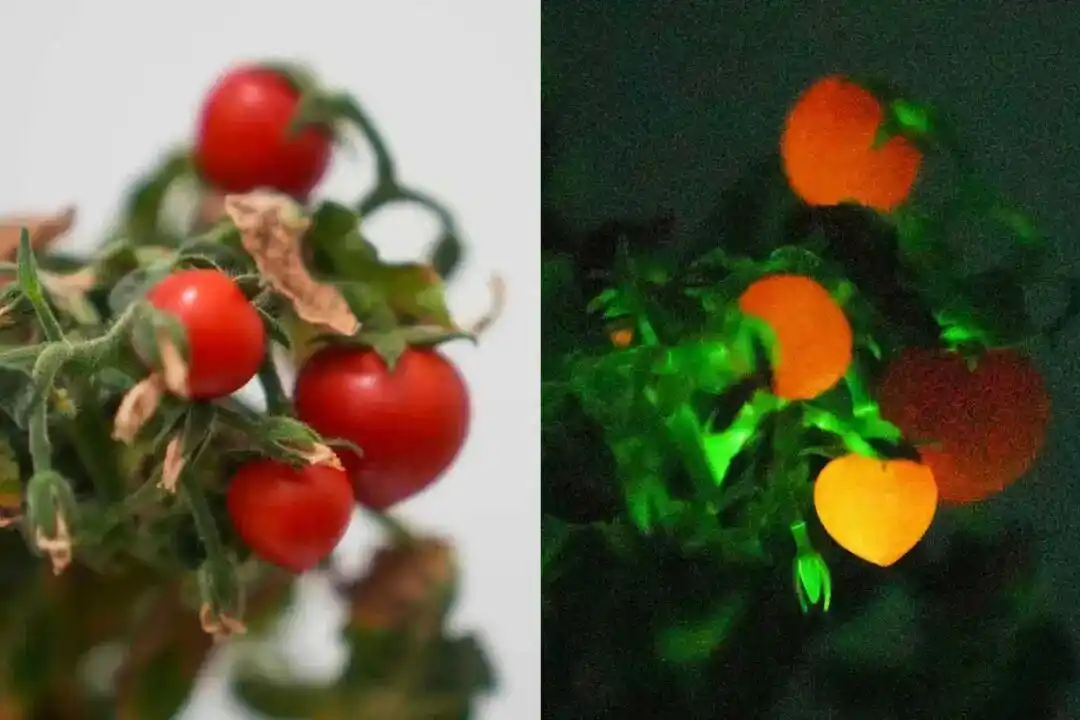
"Firefly" Petunias
In Conclusion:
In fact, the concept of genetically modifying plants using bioluminescence genes derived from fireflies is not entirely new; similar research has previously been conducted in the United States.
In 2024, a U.S.-based company successfully developed "Firefly Petunias." I looked up the details: a single luminous petunia plant—packaged in a ceramic pot—retails for $39.99, with the unit price decreasing for bulk purchases.
Regarding luminous plants cultivated domestically in China, "transiently luminous sunflowers" (which glow for only a brief period) were once available for trial sale at a price of 89.9 RMB for a bundle of five plants; however, they are no longer available for purchase.
As for the type of "stably luminous plants" featured at the beginning of this article, they have not yet been commercialized, although plans for their incorporation into landscape designs at select public parks are currently underway. Both transiently luminescent plants and stably luminescent plants are products of genetic engineering, utilizing two distinct technological approaches.
The primary difference lies in the duration of their luminescence: stably luminescent plants glow for a much longer period—potentially throughout their entire life cycle—and their luminescent trait is heritable. In contrast, transiently luminescent plants typically glow for only 5 to 7 days, and this trait cannot be passed down to subsequent generations.
(In transiently luminescent plants, the exogenous gene responsible for luminescence is directly introduced into the plant cells but does not integrate seamlessly with the plant's own genome; consequently, the trait cannot be stably inherited. Conversely, in stably luminescent plants, the exogenous gene has been successfully spliced and integrated into the plant's native genetic material.)
Diagram Illustrating Potential Application Scenarios
Given current technological capabilities, the prospect of utilizing luminescent plants as streetlights appears highly promising.
Although their brightness cannot yet rival that of conventional streetlights, planting luminescent plants presents an excellent alternative for specific locations where traditional lighting is unsuitable—such as areas where excessive light pollution is undesirable, or within aesthetically sensitive environments like public parks.
However, prior to any large-scale deployment, several practical concerns warrant our attention, such as:
How will nocturnal insects react upon encountering these glowing plants?
Given that the genes of these luminescent plants have been genetically modified, is there a risk that these altered genes could "escape" into the wild and potentially give rise to novel, unusual organisms?
