
The light bulb, a great invention that has illuminated our world for centuries, has become an everyday necessity. However, its manufacturing process is a fascinating journey of science and innovation.
But how do these simple objects convert electrical energy into light energy? What is the process of their manufacture? In this article, we will delve into the amazing journey from raw materials to finished light bulbs. Let's begin.
The Background of Light Bulbs
To understand the manufacturing process of light bulbs, understanding their history is crucial. Let's go back to the 19th century. At that time, gas lamps and candles were the mainstream lighting tools, and the concept of the electric light was still just an idea in the minds of some inventors.
Contrary to popular belief, Thomas Edison was not the sole inventor of the light bulb. While he undoubtedly played a crucial role in its development, he also built upon the foundations laid by many others.
Types of Light Bulbs
In 1800, Sir Humphrey Davy invented the first electric light—the arc lamp. However, it was too bright for home use and had a short lifespan, making it impractical. In the mid-19th century, many inventors continuously improved and refined the design, but it wasn't until 1878 that Sir Hiram Maxim obtained the first patent for the incandescent light bulb.
In 1879, Thomas Edison invented a more practical and durable light bulb. It used a lower current, a thinner carbon filament, and improved the vacuum inside the bulb. Indeed, what truly revolutionized the light bulb was the improved vacuum, which prevented filament oxidation and premature breakage.
Main Types of Light Bulbs
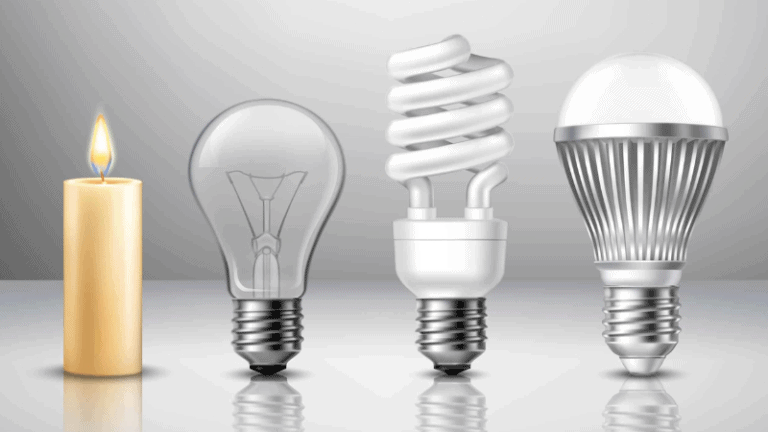
We have come a long way from Edison's original light bulb design; today, there are a wide variety of light bulbs to meet almost everyone's needs and preferences. Whether you're looking for energy efficiency, a specific color temperature, or the features of a smart bulb, there's a bulb for you.
Here are some of the main types of light bulbs currently on the market:
1. Incandescent Light Bulbs
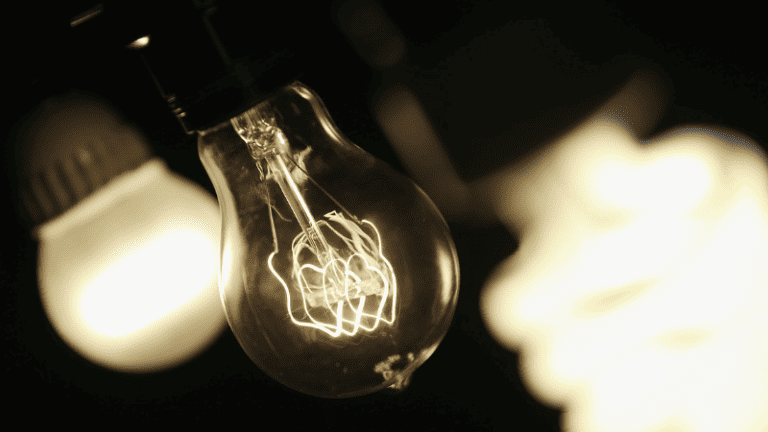
Incandescent light bulbs are the classic, old-fashioned type. They have existed since Edison's time and work by passing an electric current through a filament until the filament heats up and emits light.
While these bulbs may not be the most energy-efficient option, their warm, soft light is still commendable, and they typically have a lower initial cost. However, their lifespan is shorter than other bulbs, and they may cost more in the long run.
Incandescent Bulbs
2. Compact Fluorescent Bulbs (CFLs)
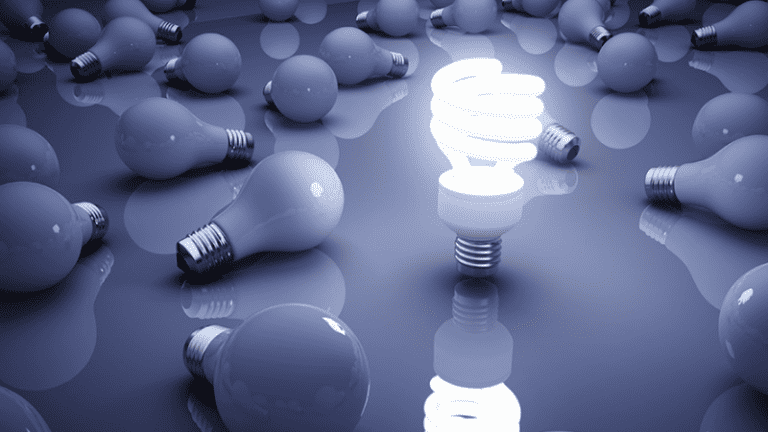
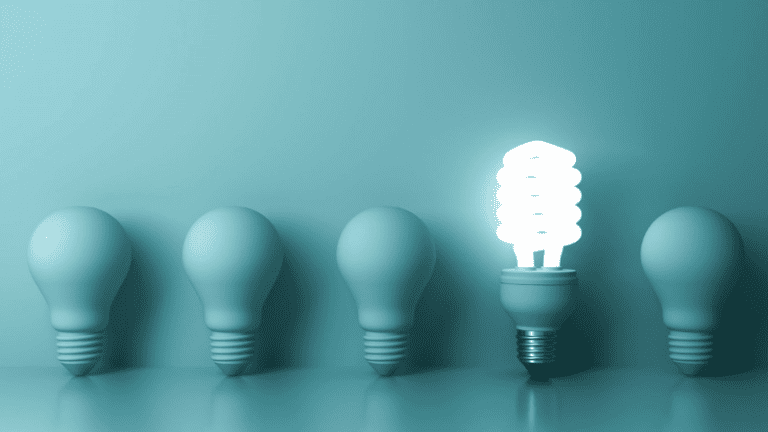
CFLs are the spiral-shaped bulbs you often see in stores. Compact fluorescent bulbs are great because they consume only a fraction of the electricity of older incandescent bulbs, saving you on your electricity bill.
However, CFLs also have drawbacks. They require some time to warm up to reach maximum brightness. And don't forget, they contain small amounts of mercury, so extra care must be taken if the bulb breaks or is discarded. Nevertheless, they remain a good choice for many households.
Compact Fluorescent Bulbs
3. LED Bulbs
LED (Light Emitting Diode) bulbs are currently the most advanced bulb technology. They are more energy-efficient than CFLs, have a longer lifespan, and do not contain harmful substances like mercury.
They allow an electric current to pass through semiconductor materials, illuminating the tiny light source we call LEDs. This process, called electroluminescence, gives LED bulbs their signature cool-to-the-touch characteristic.
Unlike incandescent and energy-saving bulbs, LED bulbs don't "burn out" like traditional bulbs. Instead, they experience "luminous flux decay," meaning they gradually dim over time but can still provide usable illumination for a considerable period.
While the initial investment is slightly higher, their superior energy efficiency and exceptionally long lifespan (typically 10 years or more) allow them to quickly recoup their costs!
LED Bulbs: Invest in LED lighting to illuminate your business
4. Halogen Bulbs
Halogen glass bulbs are very similar to incandescent bulbs, but with added technology that makes them more efficient. They work on the same principle—an electric current heats a tungsten filament to produce the warm light we all know and love.
But here's the twist: the bulb is filled with halogen gas, and a chemical reaction in this gas redeposits evaporated tungsten back onto the filament.
While halogen bulbs are more energy-efficient than incandescent bulbs, they still pale in comparison to energy-saving bulbs and LED bulbs. Halogen bulbs generate a lot of heat and have a relatively short lifespan, typically only 2 to 3 years.
Halogen Bulbs
Bulb Raw Materials and Components
1. Raw Materials
The raw materials used in bulb manufacturing vary depending on the bulb type (incandescent, fluorescent, LED, etc.).
Incandescent Bulbs:
Tungsten Filament: Used as the filament.
Glass: Bulb housing.
Argon or Nitrogen Gas: Filled inside the bulb to prevent filament oxidation.
Compact Fluorescent Lamps (CFLs):
Glass: Tubular housing.
Phosphorus Powder: Coated on the inner wall of the tube.
Mercury Vapor: Fills the tube.
Electronic Ballast: Circuit element.
Plastics and Metals: Housing and base.
Light Emitting Diodes
Light Emitting Diodes (LEDs):
Semiconductor Materials: Gallium, arsenic, and phosphorus.
Die Chip: Made of semiconductor materials.
Epoxy Resin: Encapsulates the diode chip.
Metal Lead Frame: Provides electrical connection.
Plastic Housing: Protects the LED.
Halogen:
Tungsten Filament: Similar to incandescent bulbs.
Halogen gas: Usually iodine or bromine, used to extend the life of the tungsten filament.
Glass: The bulb casing.
Formula for bulb assembly
2. Bulb Assembly
The following are some of the most common glass components that make up a light bulb:
Glass bulb casing: The glass casing of the bulb holds all other components together and protects them from external factors. It is usually made of thin, heat-resistant glass capable of withstanding high temperatures.
Low-pressure inert gas: The gas inside the bulb helps prevent the filament from oxidizing. Different types of bulbs use different gases; for example, incandescent bulbs use argon or nitrogen, while energy-saving bulbs use mercury vapor.
Tungsten filament: The tungsten filament is a thin metal wire that generates heat and light. It is made of a highly conductive and heat-resistant metal called tungsten, with a melting point as high as 3410 degrees Celsius!
Connecting wire: Connecting wires are used to connect the filament to other components of the bulb. They are usually made of highly conductive metals such as copper or nickel.
Support wire: Support wires secure the filament and provide structural support for the bulb. Unlike contact wires, they are non-conductive and are typically made of steel.
Stem (Glass Mount): The lamp post connects all other components together. It is usually made of glass and connects all the wires and contacts.
Cap (Sleeve): The bulb cap (also called the lampshade) connects the bulb to the lamp holder. It usually has threads or pins for inserting into the lamp holder.
Insulation: The insulation layer prevents electric shock by covering the live components inside the bulb. It is usually made of a ceramic material called glass ceramic.
Electrical Contacts: Electrical contacts connect the bulb to its power source (such as a lamp holder or bulb). It can be made of different materials, including copper, aluminum, or silver-plated brass.
What is the process for manufacturing a light bulb?
Manufacturing a light bulb requires sophisticated engineering design, careful material selection, and advanced manufacturing processes. Here are the basic steps in manufacturing a light bulb:
1- Design Blueprint The first step in manufacturing a light bulb is the design blueprint, which is the blueprint for our miniature light source. The blueprint meticulously plans the bulb's dimensions and features, defining details such as the size of the glass casing, the thickness of the filament, and the composition of the internal gas.
Designing a blueprint is a complex process requiring close collaboration between engineers and designers, integrating scientific knowledge, creativity, and innovation. They consider factors such as the bulb's intended use, required lifespan, energy efficiency, and production costs.
2- Raw Material Procurement
After the design drawings are completed, the next step is to gather the materials needed to produce the bulb. As mentioned above, the raw materials are diverse, ranging from the glass needed for the bulb casing to the tungsten required for the filament, and even various different gases.
Each material plays a specific role in enabling the bulb to light up, extending its lifespan, and improving energy efficiency.
Lighting Our Bulbs
Procuring these raw materials is a challenging task in itself. We source raw materials from around the world to ensure the best combination of cost-effectiveness and quality.
For example, tungsten can be sourced from China, the largest metal producer, while high-quality glass can be sourced from Europe, renowned for its long history of glassmaking.
3- Tungsten Filament Formation
Now, let's talk about the most crucial part—the making of the tungsten filament. Here, the magic happens! This tiny metal filament is the source of our light bulb's light. Can you imagine? A single filament can illuminate an entire room!
The process begins with natural tungsten, a silvery metal. This tungsten is processed into a filament thinner than a human hair. Remember, we're dealing with metal here. Tungsten has an extremely high melting point, making it ideal for emitting visible light without melting.
Tungsten Filament
The production process of the tungsten filament involves heating, stretching, and winding. The entire process is carefully controlled to ensure the filament has the appropriate thickness and length. The heating stage is particularly interesting. The tungsten is heated to extremely high temperatures, almost melting. Then, the filament is carefully stretched, ultimately creating an extremely thin and fragile tungsten wire.
Once we have the thin wire, we need to coil it up. Coiling increases the wire's resistance, which is exactly what the bulb needs to emit light. This thin wire is wound around a molybdenum wire, forming a coiled tungsten filament.
4-Glass Bulb Manufacturing
Our small light source begins to take shape! First, high-quality heat-resistant glass is used. This glass is extraordinary; its design can withstand the high temperatures generated by the tungsten filament without cracking or melting.
Now, the most interesting part. The glass is heated to a molten state—a temperature as high as 1600 degrees Celsius. Once melted, it is shaped into a light bulb using a blow molding machine.
This process is truly fascinating. The molten glass is collected at one end of a blowpipe, and then a stream of air is blown into it, shaping it into a sphere. It's like watching a glassblower at work, only on a larger scale, more like industrial production.
[Image of the sphere] After shaping, it needs to be gradually cooled through an annealing process. This step is crucial because it eliminates internal stresses that could cause the glass to break.
5- Assembling the Components All the parts are now in place; now comes the final battle—assembly. Here, the glass bulb will be connected to its shining core—the tungsten filament—and all the other components that make it a working bulb.
First, the filament and support wires are assembled to the lamp post. This delicate operation ensures the filament is installed precisely in place, guaranteeing bright light without any mishaps. We can't let the filament wobble, right?
A beautiful light bulb
After completing the above steps, we next handle the gas filling. You might ask, why add gas? This is to prevent the filament from burning out too quickly.
Typically, argon or nitrogen is filled into the bulb to replace air. This creates an ideal working environment for the filament, making it brighter and longer-lasting.
6. Adding the base and insulation
Next, we'll attach the lamp holder to the bulb. The lamp holder connects the bulb to the power source, just like your favorite desk lamp. The lamp holder is usually made of metal, such as brass or aluminum. It's attached to the bottom of the bulb and has insulation to prevent electric shock.
Once the base is securely installed, the bulb can be sealed. This is a crucial step in the whole process, as it prevents gas leakage and air from entering.
Remember, the filament needs gas. Gas helps it burn brighter and longer. A light bulb is heated and then sealed, trapping gas inside, allowing it to function properly.
A working light bulb
How do they work?
Let's talk about the inner workings of a light bulb. How does it produce that warm, inviting glow that fills a room? A magical thing happens when an electric current passes through the tungsten filament.
When the filament impedes the flow of current, it heats up to an astonishingly high temperature, approximately 2500 degrees Celsius. This high temperature causes the filament to emit a bright white light—the light you see from a light bulb.
So, let's recap: current enters, heats the filament, the filament emits bright light, and lo and behold, the room is lit!
Remember the gas sealed inside the bulb that we mentioned earlier? It also plays a crucial role. It slows down the evaporation of the tungsten filament, preventing it from burning out too quickly, thus extending the bulb's lifespan.
So, the next time you turn on a light switch, take a moment to appreciate the ingenious science and complex manufacturing process that brings a simple light bulb to life.
