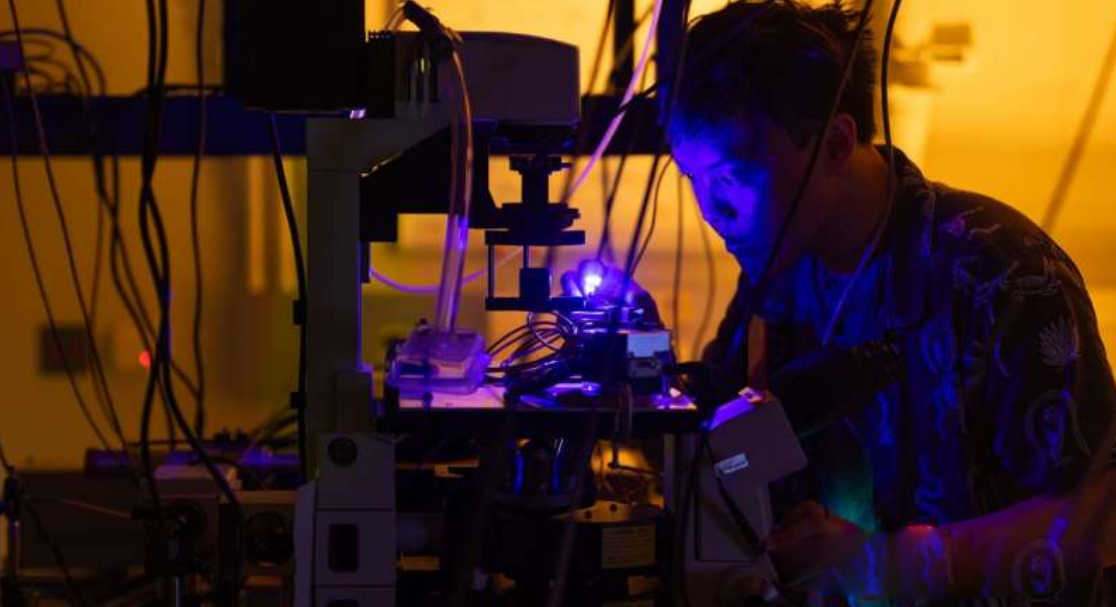
LEDs, as thin as a human hair, may soon be able to take over tasks traditionally handled by lasers, from transmitting data inside server racks to powering next-generation displays. A new study co-authored by Roark Chao, a doctoral student at the University of California, Santa Barbara, points to a viable path forward. The research was published in the journal *Optics Letters*.
Roark Chao, who studies electrical engineering, said, "We're talking about devices that are really only the size of a hair follicle. If you can design how the light is emitted, these miniature LEDs could start replacing lasers for short-range data communication."
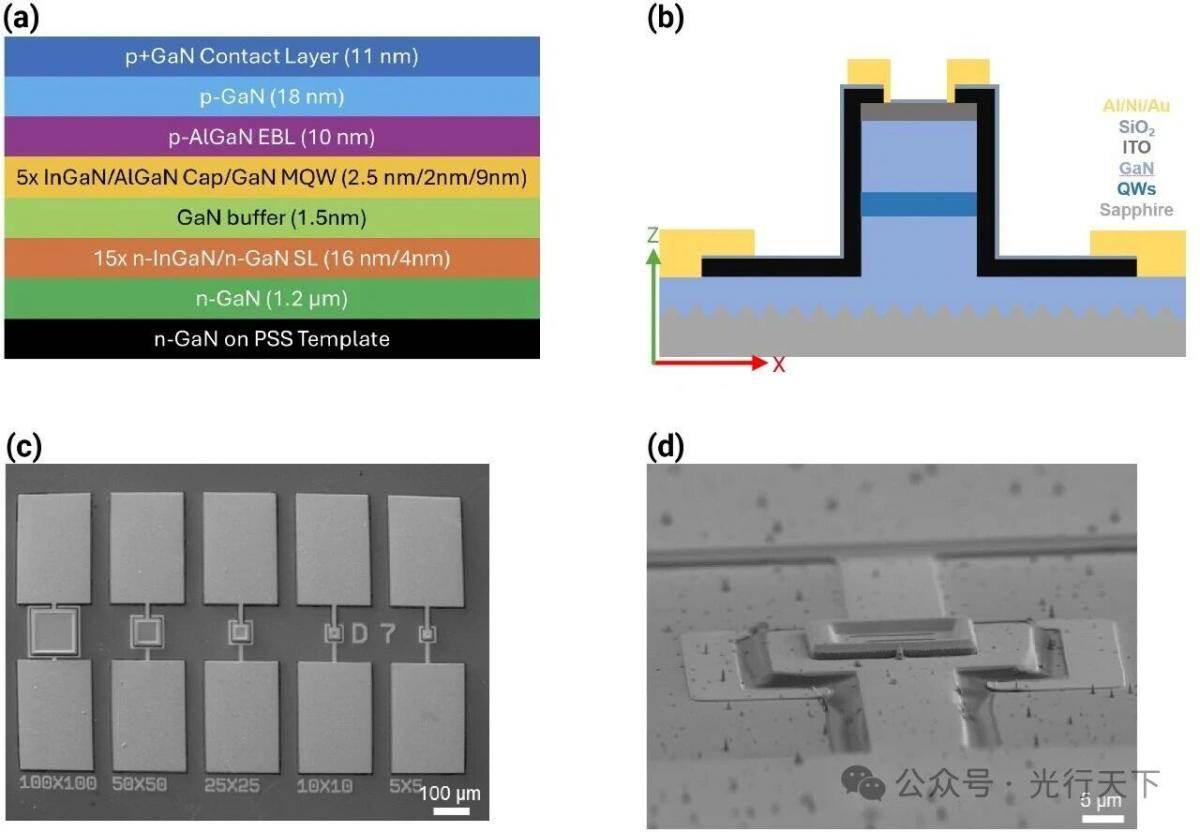
The study demonstrates a novel design for miniature light-emitting diodes that simultaneously improves efficiency and beam directionality. By using distributed Bragg reflectors to laterally surround the emitting region, the researchers achieved approximately 20% higher output power from the air side and over 130% higher output power from the substrate side compared to a reference device, while reducing the beam divergence angle by approximately 30%.
Beyond more precisely guiding light, the redesigned microLEDs offer significantly higher efficiency. The research team observed approximately 35% improvement in electrical efficiency and 46% improvement in plug efficiency compared to traditional microLED designs—meaning these devices can convert more electrical energy drawn from power outlets into usable light.
MicroLEDs—typically 100 micrometers or less in width—are emerging as a promising alternative to lasers in short-range optical links, particularly within data centers where thermal management, reliability, and energy usage remain ongoing challenges.
"A major problem with lasers is that they start to exhibit thermal issues at relatively low temperatures," says Roark Chao. "MicroLEDs can be driven at much higher temperatures without the need for complex cooling. This means less replacement, lower costs, and greater flexibility in data centers."
With the continued expansion of cloud computing and artificial intelligence, data centers must transmit massive amounts of information rapidly and efficiently. Even small improvements in light sources can have significant economic impacts.
“What’s exciting about microLEDs is that they offer multiple solutions within a single package,” says Roark Chao. “They can improve data communication, enable brighter, thinner displays, and even be used in areas like augmented reality or virtual reality—all using the same underlying technology.”
Roark Chao enrolled at UC Santa Barbara in 2020 as an undergraduate in electrical engineering and went on to pursue his PhD. He attributes the university’s comprehensive research infrastructure, from materials growth to nanofabrication to device testing, to its accelerated pace of work.
“You can simulate design, grow crystals, fabricate devices, and test—all on campus,” says Roark Chao. “That speed from concept to experiment is what makes this place so powerful.”
