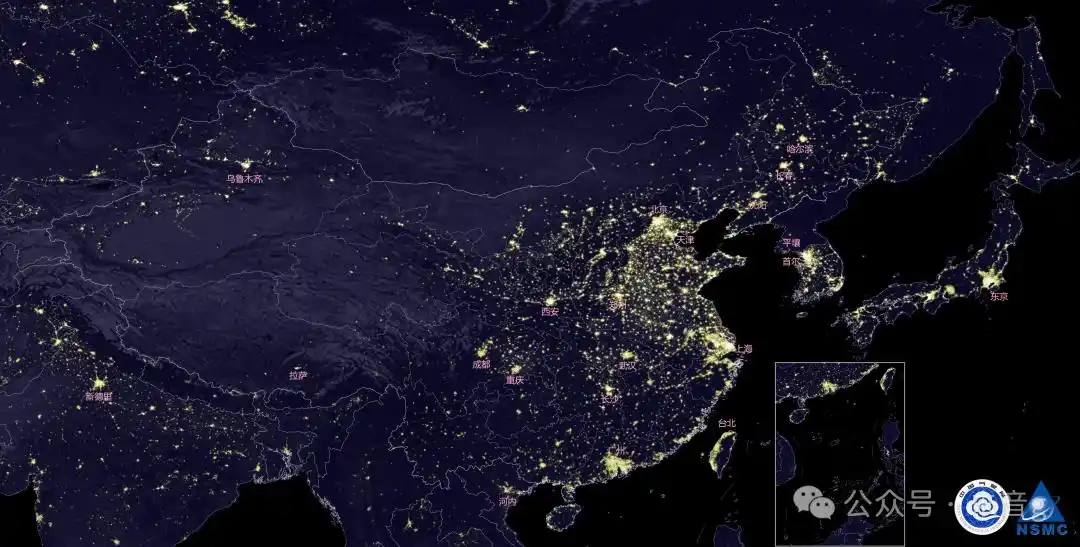

Satellite observations show that global nighttime lighting increased at a rate of approximately 2% per year from 2014 to 2022. While the Earth's nights are becoming brighter, this trend is highly unevenly distributed. The related research was published in *Nature* on April 8th.
[Image caption: This image of Earth at night shows changes in human nighttime activity. Image credit: NASA Earth Observatory]
"Although the overall global lighting increase is 16%, it doesn't mean that light is increasing in all regions," explains Christopher Kyba of Ruhr University Bochum in Germany, one of the paper's authors. "We found that global light radiation increased by 34% in areas of increased lighting, but this was partially offset by an 18% decrease in radiation in other areas."
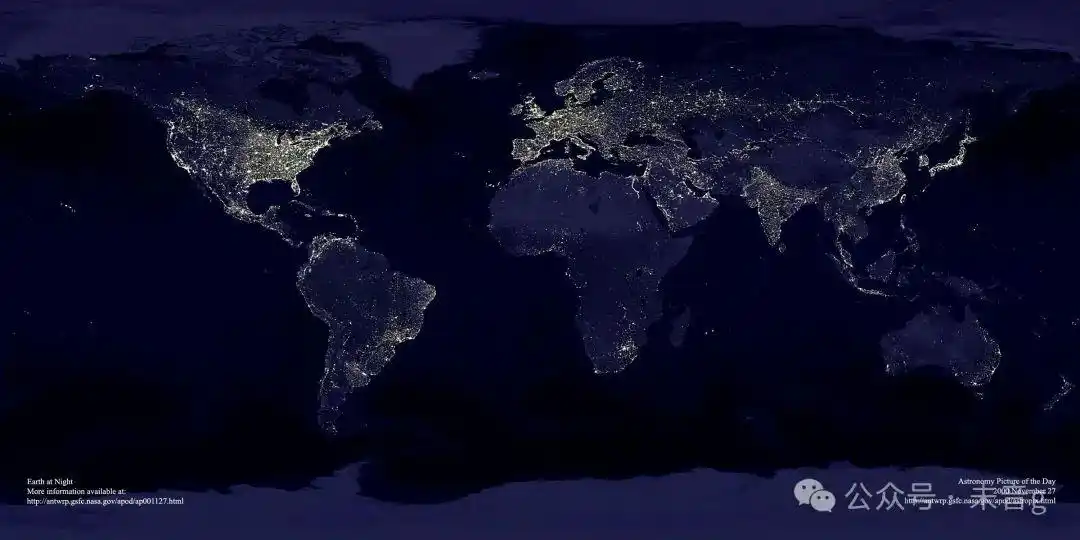
These findings indicate that changes in nighttime lighting are more dynamic and regional than previously thought. Rapid urbanization has made nights brighter in countries like India. In contrast, some industrialized countries have seen a decrease in light radiation, often related to the promotion of LED lighting and policies aimed at reducing light pollution.
Not all changes are gradual. Following the outbreak of the Russia-Ukraine conflict, nighttime lighting in Ukraine decreased significantly. France also saw a notable decline, with nighttime brightness decreasing by 33%, as many cities turned off streetlights after midnight to conserve energy and reduce light pollution.
"Despite regional differences, overall luminous radiation in Germany remained almost unchanged," said Kyba. "In areas where lighting increased, luminous radiation increased by 8.9%, while in areas where it decreased, it decreased by 9.2%."
Satellite monitoring data shows that overall nighttime luminous radiation across Europe decreased by 4%. However, this decrease may not reflect human perception because satellites detect light differently than the human eye.
A major breakthrough in this study was the use of full-resolution real-time nighttime data. Previous analyses relied on monthly or annual averages, making it difficult to capture subtle short-term or localized changes. "No global analysis has ever used full-resolution nighttime data," Kyba emphasized.
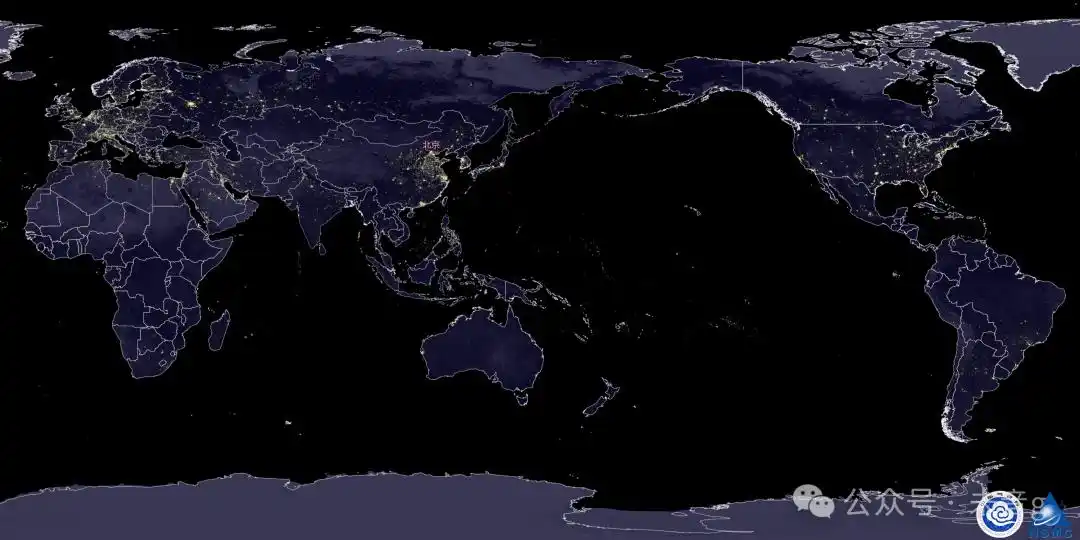
The research team also employed a new algorithm to correct for the angle at which satellites observe the Earth. For example, residential areas tend to be brighter when viewed from a certain angle, while dense urban centers tend to be brighter when viewed directly overhead. Incorporating these factors makes monitoring changes in light radiation more precise.
This study used data from the visible-infrared imaging radiometers (VIRMs) on the NOAA and NASA's Suomi NPP, NOAA-20, and NOAA-21 satellites in the day and night bands. These satellites typically take images between 1 a.m. and 4 a.m. local time, covering almost all areas between 70°N and 60°S latitude each night. Each pixel in the image represents approximately 0.5 square kilometers.
To ensure accuracy, researchers only counted artificial light sources; natural phenomena such as wildfires and auroras detected by the satellites were excluded.
Understanding changes in nighttime lighting is of practical significance. "Light is a major source of electricity consumption at night, and light pollution damages ecosystems," Kyba said. "Therefore, understanding the trends in both is crucial."
As part of the European Space Agency's Earth Explorer 13 mission, Kyba is leading the development of a new satellite specifically for monitoring nighttime light. This satellite can detect fainter light sources and provide higher resolution, thereby reducing uncertainty in global lighting trends.