

Before the invention of the light bulb, before office buildings were constructed, and before deep-plane buildings with infrared-blocking glass appeared, humans lived in an environment far broader than what we now call "light." Sunlight's wavelength range is approximately 300 to 2500 nanometers. The visible light portion that our eyes can perceive occupies only a small fraction of this range.
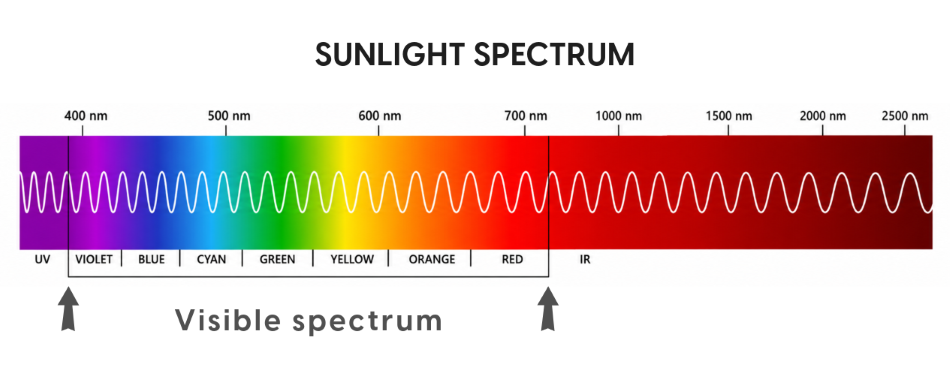
The rest of the solar spectrum, including near-infrared rays that warm the skin and, according to a growing body of research, appear to play a vital role within our cells, is readily available.
Then we moved indoors. The spectrum quietly shrank.
The article is as follows:
ETI Lighting
Research Results: A peer-reviewed study published in *Scientific Reports* by researchers at University College London provides strong evidence for this shift. The researchers worked in a deep building whose window films completely blocked long-wavelength infrared light. They placed incandescent desk lamps next to 22 employees who were already working under standard LED overhead lights. Two weeks later, color contrast sensitivity, a key indicator of visual performance, improved by approximately 25% on both major visual axes. This improvement persisted after four and six weeks of removing the incandescent light.
The control group, using similar LED lights without supplemental lighting, showed no substantial changes.
The mechanism the researchers identified is related to mitochondria. The blue light wavelengths of standard LED lights are primarily concentrated in the 420-450 nm range, while wavelengths above 700 nm are almost nonexistent. The authors suggest that this spectral imbalance inhibits mitochondrial function in the retina (the tissue with the highest metabolic rate in the body), and that reintroducing longer wavelengths of light can reverse some of this inhibition.
Why Caution is Still Needed
Careful reading is crucial. This study used only 22 participants and was conducted in the same location during the darkest months of autumn and winter in the UK, with participants receiving almost no sunlight and uncontrolled lighting in their homes over the weekend. The paper's causal arguments far exceed what the sample size can support. The authors even used the word "weakening" in the title. This is merely an assertion and has not yet reached a consensus.
We continue to follow this area. In November 2024, we reported on a study published in the *Journal of Environmental Psychology* that showed near-infrared irradiation could improve mood and stress indicators under controlled conditions, but also noted that its effects on cognition were more complex.
This new study from UCL adds a real-world workplace setting, a broader range of interventions, and durable results that previous narrow-wavelength experiments failed to produce.
