
In the current era of rapid development of urban rail transit, underground transportation spaces have transformed from simple passageways into urban public landmarks that integrate culture, art, and function. Lighting, as a core element in creating underground spaces, not only fulfills basic functional lighting needs but also shapes the spatial atmosphere and conveys regional culture through the language of light and shadow. The Yu Garden Station of Shanghai Metro Line 14, with its lighting design themed "Shanghai Pulse," won numerous honors, including the 2022 A+Awards Professional Jury Award, becoming a benchmark case for domestic rail transit lighting design.
I. Project Overview and Lighting Design Background
The Yu Garden Station of Shanghai Metro Line 14 is located in Huangpu District, Shanghai, with a total construction area of 8,000 square meters. It officially opened in January 2022 and is the deepest station in the Shanghai Metro, reaching a depth of 36 meters underground, equivalent to a 10-story building. Located in the heart of the city's commercial district, adjacent to historical and cultural landmarks such as the Bund and the City God Temple, and facing the Huangpu River to the east, overlooking Lujiazui across the river, the project shoulders the dual mission of connecting historical landscape with modern urban life, and inheriting Eastern culture while showcasing an international perspective.
As an underground space reaching a depth of 36 meters, Yu Garden Station faces challenges such as stringent civil engineering conditions, complex electromechanical pipelines, and limited clearance height. Furthermore, the underground space naturally lacks natural light, placing extremely high demands on the functionality, comfort, and artistry of the lighting system. The project's designer, XING DESIGN, with "Water's Pulse" as its core concept, deeply integrates lighting with architectural space and local culture, creating an underground lighting space that combines practicality and artistic beauty.
II. Core Concept of Lighting Design: Water and Light, Echoing the City's Cultural Heritage
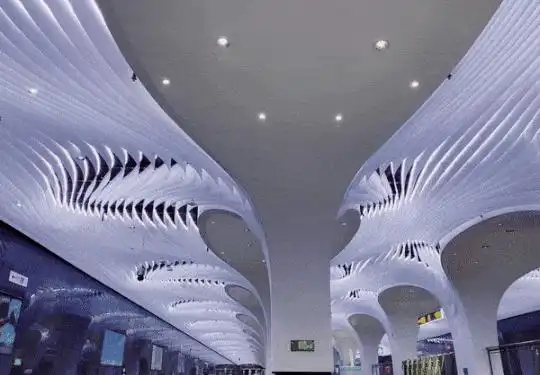
The lighting at Yu Garden Station closely adheres to the core theme of "Shanghai Pulse," extracting the dynamic lines of the waterfront as its basic design language. Light and shadow complement the curved architectural texture of the entire station, subtly integrating local cultural elements to create an integrated, immersive passageway space that blends ancient Eastern charm, classical texture, and modern style.
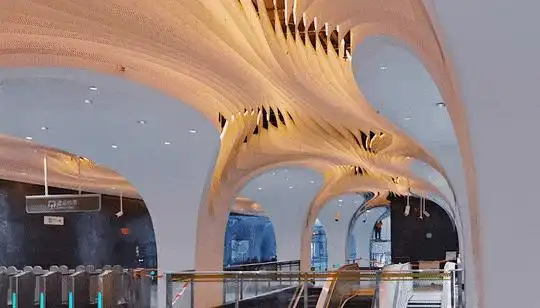
The curved columns of the station hall replicate the flying eaves of the City God Temple, a non-heritage intangible cultural heritage, with precise directional lighting to create a realistic reflection in the water. The curved colonnade throughout the station outlines the contours of a classical Chinese arcade, with uniform, soft light dispelling the oppressive feeling of the deeply buried space. Modern lighting techniques restore traditional architectural aesthetics, achieving a two-way fusion of ancient and modern urban culture.
Using the entire rail transit network as a metaphor for the city's vibrant arteries, the 36-meter-deep station anchors its position as the underground heart of the city. Intelligent dynamic light and shadow synchronize with the rhythm of a real person's pulse, injecting a vibrant human touch into the hard-surface commuting space and breaking through the limitations of traditional subway lighting design that prioritizes practicality over atmosphere.
Strictly adhering to the safety and operation standards for rail transit station lighting, it solidifies the core foundation for passenger safety and clear traffic guidance; adapting to the shortcomings of messy pipelines and complex irregular structures within the station, it scientifically optimizes the overall visual hierarchy through zoned lighting, effectively enhancing the overall experience and transparency of waiting areas deep underground.
III. Lighting System Technical Implementation: Parametric Design + LED Dynamic Canopy
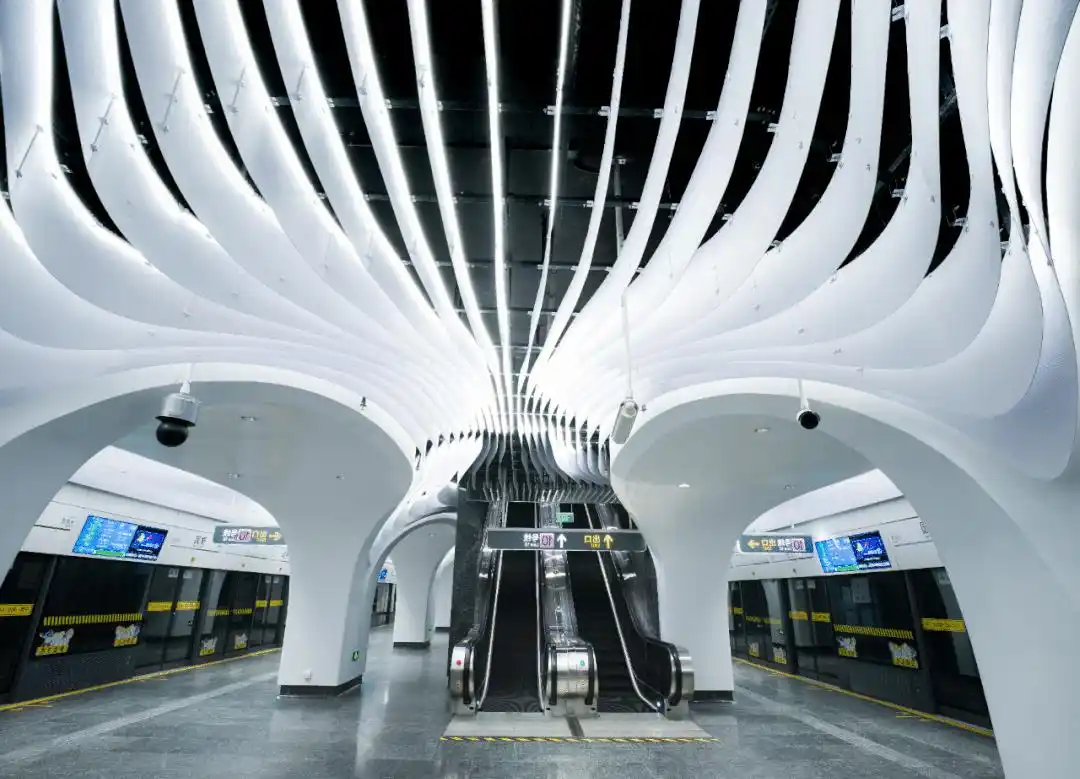
The core highlight of the Yu Garden Station lighting system lies in the integrated fusion of architectural space and lighting equipment, as well as the innovative application of dynamic lighting technology. All designs are based on the actual conditions of the project, using technical means to solve spatial problems and achieve artistic effects.
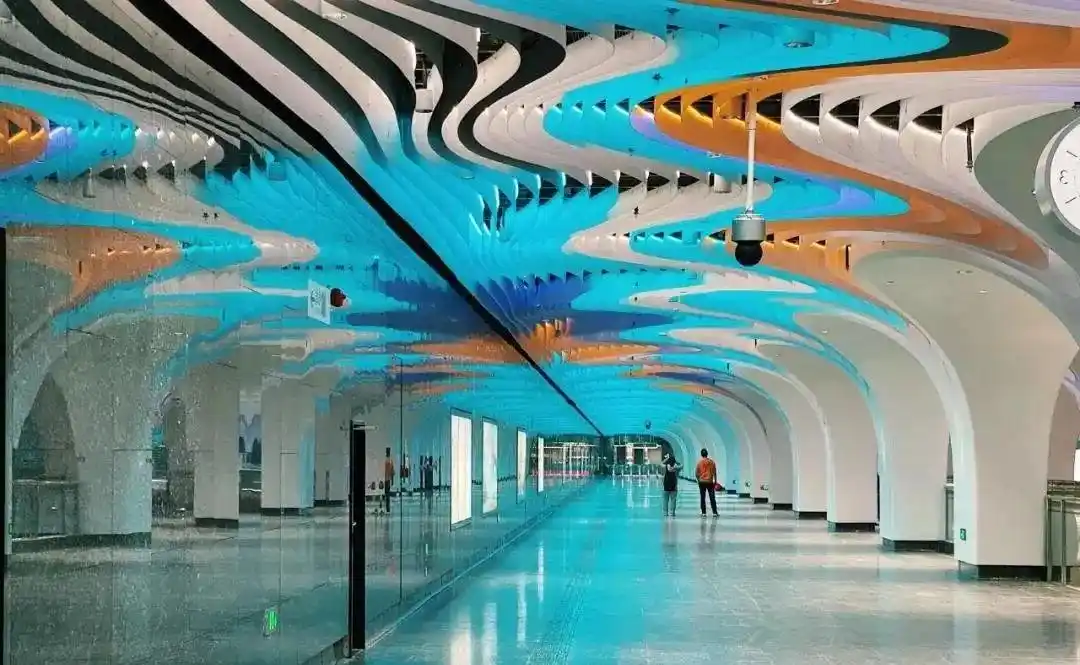
Parametric lighting design adapts to non-standard spatial structures
The Yu Garden Station's colonnade plan is shaped like a date pit to accommodate the separation and convergence of tracks. The ceiling pipelines in the station hall are non-homogeneously distributed, and curved surface units cannot be simply repeated. The lighting design, incorporating parametric architectural generation technology, customizes the lighting layout according to the spatial structure, optimizing the angle and coverage of light projection. While adapting to spatial changes, it ensures the integrity and uniformity of the lighting effect, while also considering the feasibility of fabrication and installation.
**3D LED Canopy: Creating a Dynamic Light and Shadow Core**
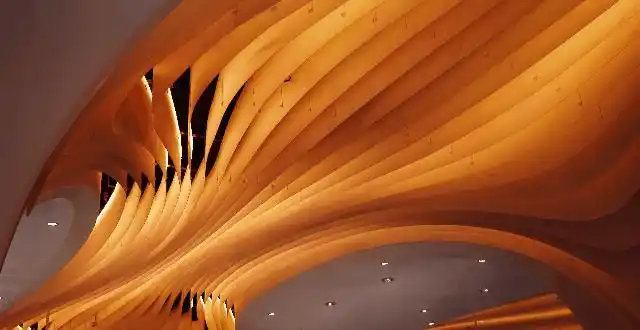
The project combines an arched ceiling with LED lighting to create a large-scale 3D LED dynamic lighting canopy, becoming the visual core of the entire station hall. This canopy is not merely a simple lighting decoration, but an integrated lighting system perfectly aligned with the building's curved surface. Through changes in color, brightness, and dynamic movement, it brings a variety of light and shadow effects to the underground space, solving the problem of a lack of visual focus in deep underground spaces.
**Modular Presets: Balancing Stability and Flexibility**
The LED canopy system has preset multiple basic lighting effects to meet the basic lighting and atmosphere creation needs of daily operations; it also has flexible expansion capabilities, allowing for adjustments to the light color according to different scenes and festivals, achieving a "one space, multiple scenes" lighting effect, enhancing the space's practicality and appeal.
IV. Lighting Scenarios Application: Festival Customization + Public Participation, Activating Spatial Vitality
The lighting at Yu Garden Station breaks away from the traditional fixed lighting model of rail transit, focusing on creating scene-based and interactive light and shadow effects. It upgrades basic lighting into a vibrant carrier of urban public culture, revitalizing the overall vitality of the underground space.
Relying on an intelligent LED canopy system, it adapts to the changing light and shadow tones of folk festivals throughout the day. Traditional festivals feature festive main colors, while special nodes are paired with dynamic soft light effects, synchronously linking with the festive atmosphere of the entire city and extending the underground public cultural service scenarios.
An innovative channel for public light and shadow creative submissions has been opened, breaking down barriers within the professional design circle. The canopy lighting content is updated regularly, building a recyclable and renewable light and shadow ecosystem to maintain the long-term humanistic vitality of the underground space.
The high-value integrated light and shadow landscape has become a popular urban landmark, attracting diverse visitors for photo opportunities. The comprehensive lighting design addresses both the essential needs of rail transit safety and smooth traffic flow, effectively enhancing the quality of underground spaces and truly empowering the development of urban cultural tourism and public spaces through light and shadow.
V. Project Value and Industry Implications
The lighting design of Yu Garden Station on Shanghai Metro Line 14, with culture as its soul, function as its foundation, and technology as its wings, provides valuable practical experience for underground space lighting in domestic rail transit systems. From the perspective of the lighting industry, the core value of this project lies in:
First, the balance between culture and function. It avoids blindly pursuing artistic effects at the expense of the safety and functionality of underground space lighting, subtly conveying regional culture through light and shadow, achieving a unity of practicality and aesthetics.
Second, the integration of technology and space. For ultra-deep and structurally complex underground spaces, parametric design and dynamic LED technology are used to solve spatial challenges, allowing lighting to serve spatial optimization.
Third, innovation in public accessibility and interaction. Through festive scenes and public participation, the lighting system becomes part of the city's public culture, enhancing the sense of belonging and vitality of public spaces.
